Farrell Buettgen Savory Waffle Kitchen Farrell Buettgen Savory Waffle Kitchen
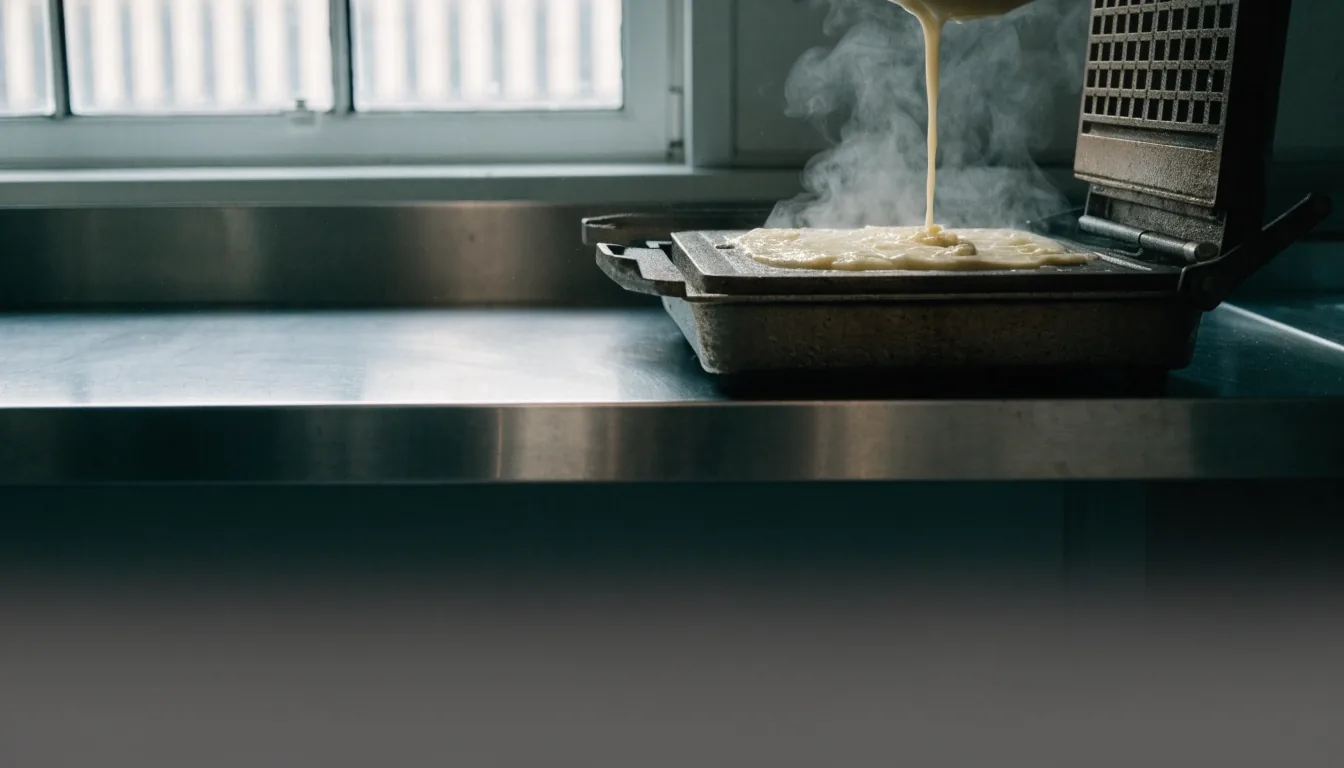
An open waffle iron mid-pour on a stainless steel counter, shredded potato batter meeting the hot grid with steam rising and a small dial timer at the right.

Techniques reference

Shredded potatoes, hot iron, crisp edges.

The skill set behind every savory waffle and hashbrown waffle on this site — four habits, an honest timer, and a hot dry plate.

The four skills

4

Moisture removal, batter hydration, browning, and mix-ins. Learn these and the copycat waffle house-style breakfast you are after stops being a gamble.

What this page is for

The waffle house style waffle batter recipe you find online rarely tells you what to do when your kitchen runs humid or your flour drinks more buttermilk than the writer expected. This page is the reference we reach for when a cook asks why their waffle came out soft, why it stuck to the plates, or why the edges never went crisp.

Every savory waffle recipe on this site comes down to the same four skills. They are habits, not secrets — and once you have them, you can improvise.

Where the failures come from

  • Potatoes steam instead of brown because a second squeeze was skipped.
  • A savory batter was mixed smooth and the waffle turned tough.
  • The lid was cracked early and the crust tore in half.
  • Finished waffles were stacked and the crust went soft at the table.
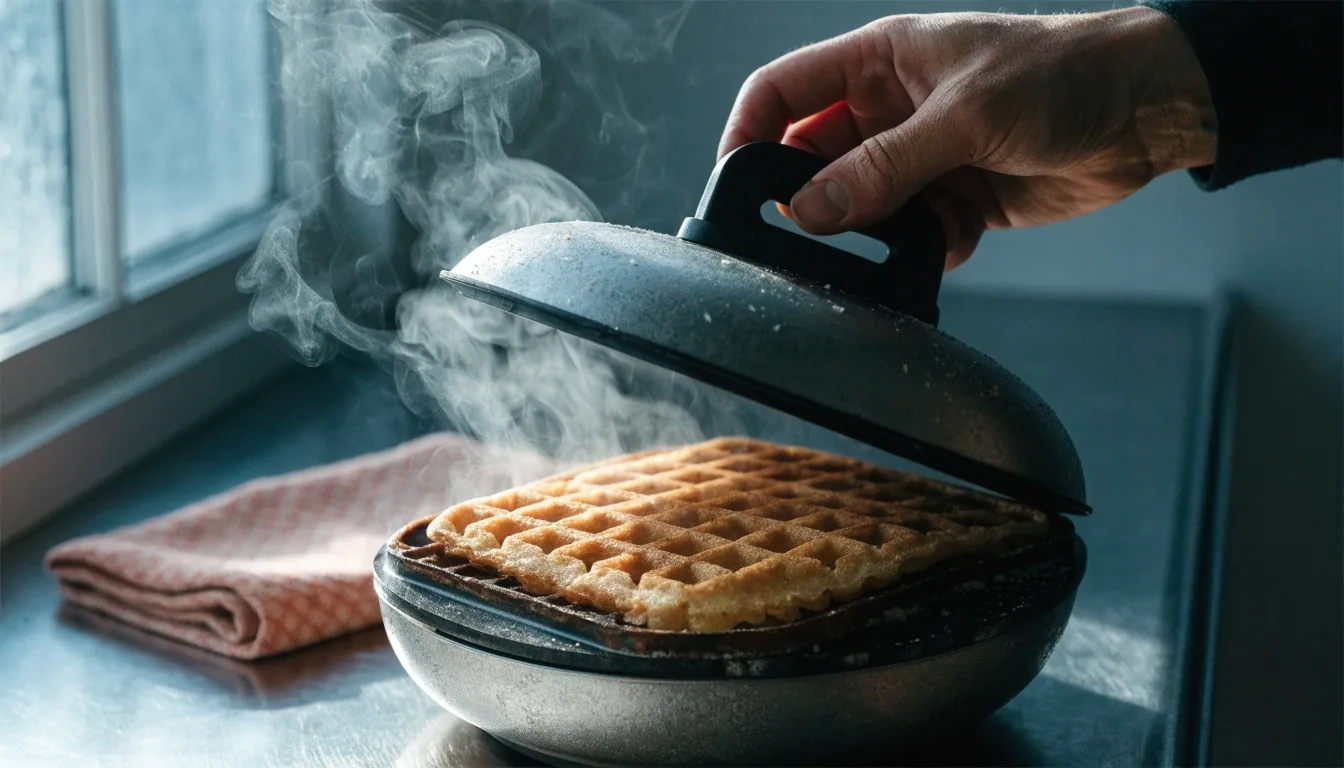
A hand lifting the lid of a waffle iron as a crisp-edged savory waffle clings to the hot grid for a moment.

The release The crust sets, the lid lifts without resistance, and the waffle lets go on its own — no force, no knife, no cracked lid.

The techniques that make savory waffles work

Four moves cover almost every failure we get asked about. Read them in order once, then keep this page open at the counter while you cook.

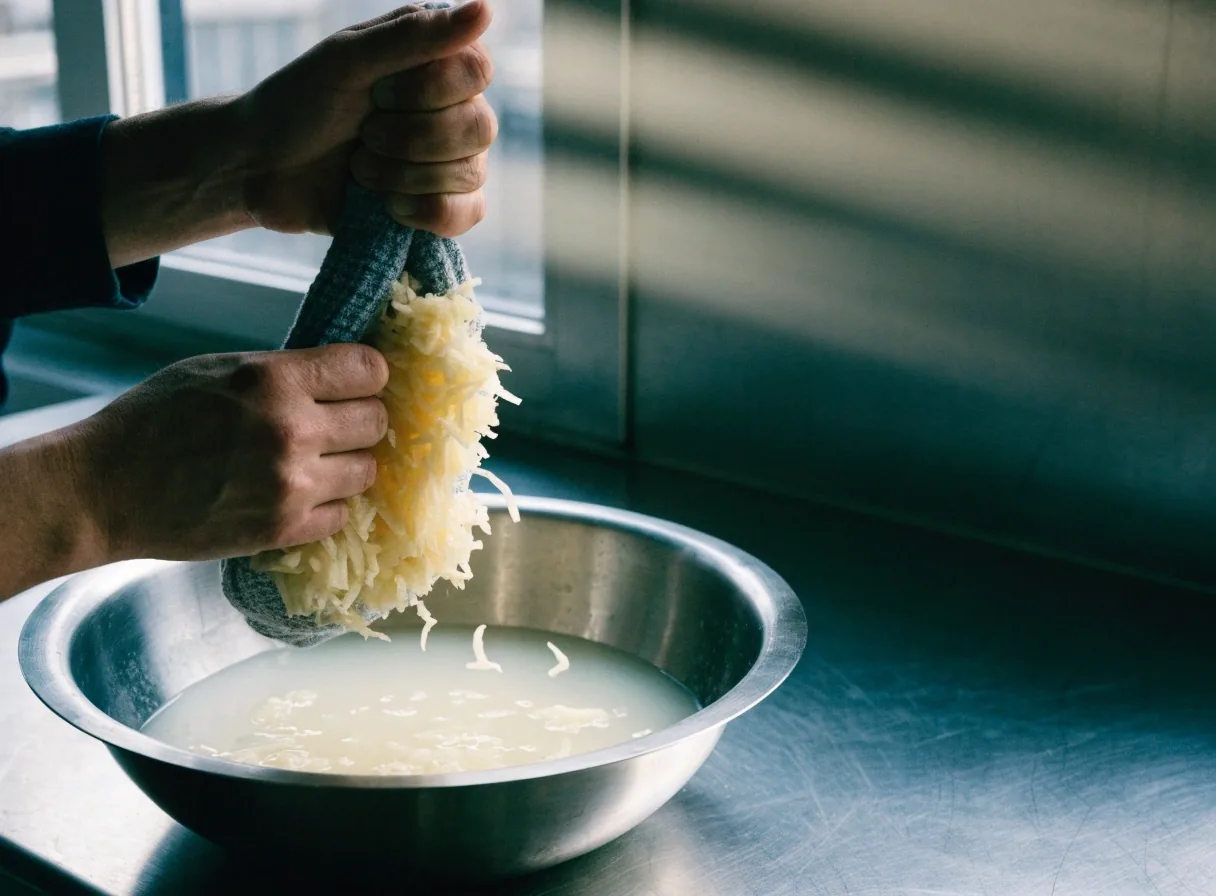
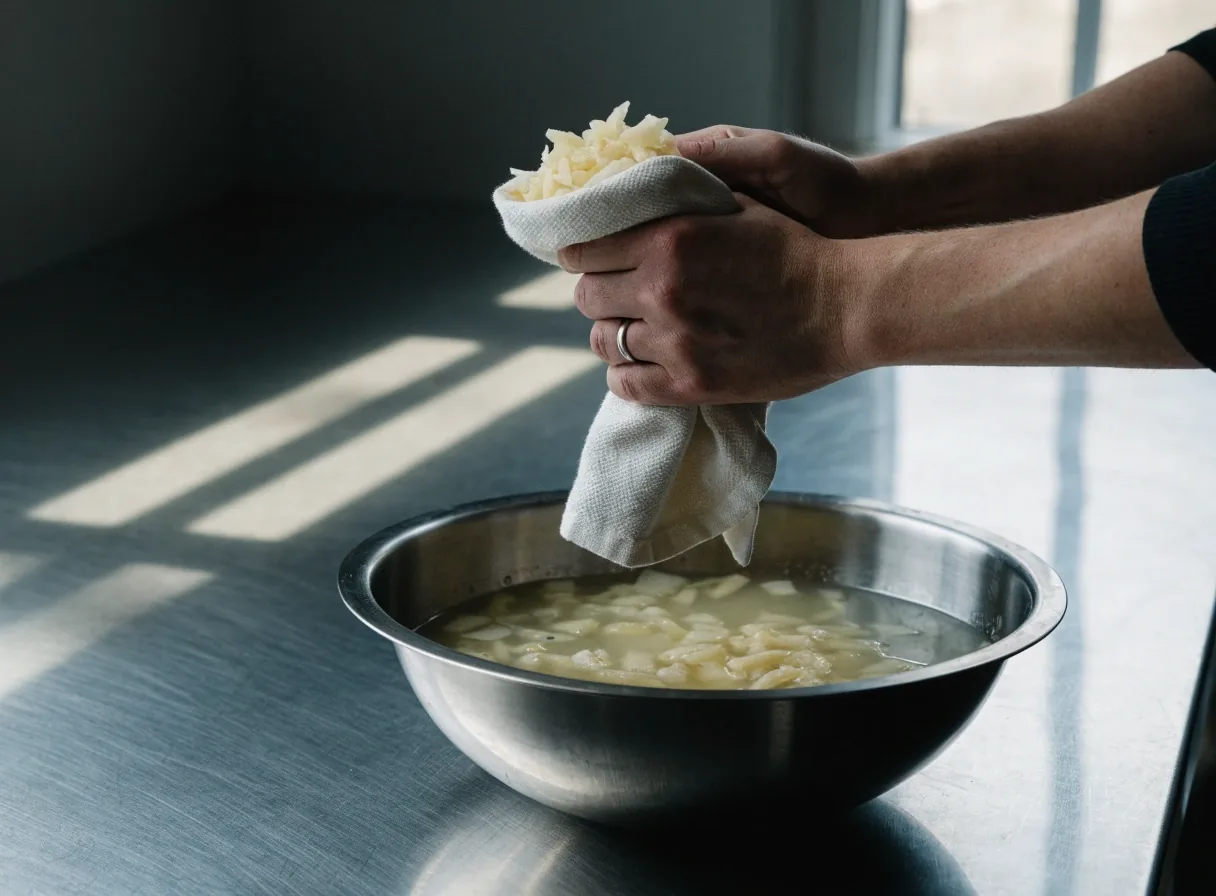
Hands twisting a dish towel full of shredded potatoes over a steel bowl, squeezing out potato water.

Skill one

Moisture removal is the whole game

Water is the difference between a crisp waffle and a limp one. Potatoes hold plenty of it; sharp cheddar releases moisture as it melts; buttermilk and eggs add more. The waffle house style hashbrowns you are trying to reproduce get their edge from the iron, not from the recipe — and a wet shred will steam instead of brown no matter how hot the plates are.

So the method is a permanent trade. Add enough liquid to bind the mixture or hydrate the flour, then remove every drop of excess you can before cooking. Grated potatoes get squeezed twice. Bacon gets drained on paper towels. Cheese that arrived packed in brine gets patted dry and shredded by hand. This one habit fixes most failed batches, and it costs you about a minute of counter time.

  • Squeeze potatoes twice — once salted, once after they rest.
  • Drain bacon on paper and crumble it small.
  • Pat brined cheese dry, then shred it yourself.
Skill two

Why you squeeze potatoes twice

The first squeeze removes the free water sitting between the shreds. The second removes the water that rises back to the surface after the shreds relax. Salt the potatoes before the first squeeze and the salt pulls even more moisture out of the cells.

Skip the second squeeze and your potatoes will steam under the lid rather than brown against the hot plate. It takes thirty extra seconds, and it is the difference between crispy edges and a soft, pale waffle — the classic symptom of a hashbrown waffle that looked right in the bowl and disappointed on the plate.

Salt before the first squeeze
2 min wait
Second squeeze, after the shreds relax
30 sec
Target texture before it hits the plates
Squeaky, not wet

Skill three

Building a savory batter

A savory batter has little or no sugar and leans on salt, cheese, herbs, and fa. It should be thick enough to scoop rather than pour, so it holds its structure in the iron instead of running out the sides.

Mix the wet into the dry with a few strokes and stop while streaks of flour remain. Overmixing develops gluten and makes the waffle tough — that is the entire reason a copycat waffle house breakfast recipe can look right and still eat like rubber. For masa harina or other corn-based batters, let the batter rest ten minutes so the flour hydrates evenly before it hits the iron.

Consistency test

Lift the spoon and let the batter fall back. It should ribbon and hold a soft ridge for a second or two before it settles — that is the thickness that spreads under the lid without escaping.

A wooden spoon lifting a thick savory batter over a steel bowl to check its consistency.

Skill three, continued

Hydration: how much liquid is too much

Every flour absorbs liquid differently, so a recipe is a starting point, not a rule. If the batter pours like water, add flour a spoonful at a time. If it fights the spoon, add buttermilk a splash at a time. You are aiming for a consistency that spreads under the lid but does not run out the sides.

Once you know the right thickness for your iron and your flour, you can adjust any savory waffle recipe on the fly — including the masa harina version, which drinks buttermilk differently from all-purpose flour and often wants a looser hand.

Skill four

Browning: what heat actually does

Browning is a chemical reaction between heat and the sugars and proteins on the surface of the batter. It needs a hot, dry plate and a surface that is not wet. That is why moisture removal matters twice: wet surfaces cannot brown, they only steam.

Grease the plates so the crust releases cleanly. Cook until the edges are deep golden and the surface looks dry. Pale waffles are undercooked, and pale potatoes taste raw — if you wanted an easy waffle house-style breakfast, this is the step that makes it taste like one instead of a bowl of hot shreds.

Mix-ins

Cheese and scallions done right

Sharp cheddar is the best cheese for a savory waffle because it brings salt and melts cleanly without sweetening the batter. Fold it in cold and in shreds so it stays distinct. Scallions go in sliced thin, white and green parts both, to spread the flavor through the batter instead of pooling in one bite.

Bacon should be cooked crisp and crumbled small so it does not tear the batter or leave wet pockets. Shred the cheese yourself rather than using pre-shredded, which is coated in starch and melts poorly — a detail that shows up clearly in a waffle house cheese hashbrowns recipe and in every cheddar bacon savory waffle we have tested.

  • Cheese: cold, hand-shredded, folded last.
  • Scallions: sliced thin, white and green.
  • Bacon: crisp, crumbled small, drained first.

Three habits worth keeping at the counter

Kitchen habitat

Let the batter rest before the iron

A ten-minute rest on the counter lets the flour hydrate and the salt dissolve. Whole-grain and masa batters change the most; all-purpose changes the least. If you are cooking more than one waffle, rest the batter while the iron comes up to heat.

Heat signature

Grease matters more than batter

A brushed, oiled plate releases; a dry or patchy one grabs. Brush the grid and the edges with a neutral oil before each waffle rather than pouring oil into the batter, and let the iron reheat between batches so the oil does not scorch.

The finish

Rest and serve to keep the crust

Rest finished waffles on a wire rack, never a plate, so steam escapes downward rather than pooling underneath. Cooking in batches? Hold them in a warm oven on a rack rather than stacking them. Wet toppings go on at the last moment.

The numbers that hold the method together

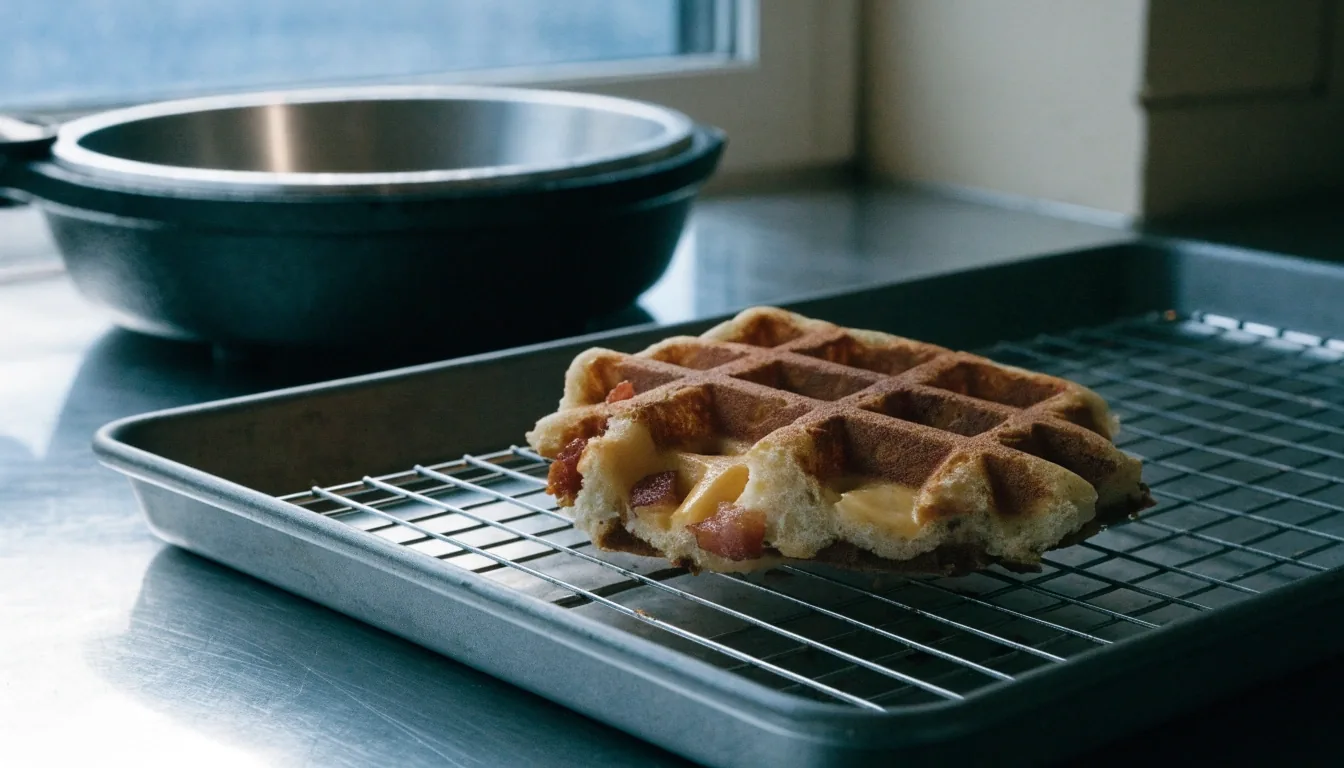
A cheddar and bacon savory waffle just off the iron, torn open to show bacon crumbles through the batter.

Iron surface

190°C

The plate temperature we aim for once the iron is fully hot. Below this, the batter steams and stays pale; well above it, the outside scorches before the middle sets. Check yours with a dial thermometer laid on the closed grid, not with your hand.

Shred ratio

2squeezes

One before the shreds relax, one after. Both go into the same bowl; you pour off the water once, at the end.

Rest window

10min

A short rest for the batter before the first pour — long enough for the flour to hydrate, short enough that the leavening still carries.

Mix-ins

3folds

Cheese, scallions, bacon. Three folds with a spatula, not a whisk — enough to distribute them, not enough to work the gluten.

The release rule

Letting the crust set

A waffle sticks because the crust has not set yet. The fix is patience, not force.

Grease the plates generously, then wait until the edges look dry and the lid lifts without resistance before you check. If it still resists, close it and give it another minute. Once the surface has set, the waffle releases on its own. Cracking the lid early to check is the single most common reason a savory waffle tears in half, and it is the one habit we would ask you to unlearn first.

Still stuck on a batch

Ask us what went wrong

Tell us what the waffle looked like and what you did — the shreds, the iron, the toppings — and we will work it back to the step that needs attention.

Kitchen
6727 Delridge Wy SW
Seattle, WA 98106
Monday to Friday, 9:00 AM – 6:00 PM