
Ask the cook
Send the Kitchen a Question or a Note
If a savory waffle recipe did not work the way the page said, or a step lost you, tell us. If you have a question about cooking hashbrown waffles in your own iron, ask it.
Email first
The address that reaches the cook
Recipe details are easiest to sort through in writing. Send the iron you use, the time your batch took, and what the batter did when it hit the grid.
DavidEusebio@farrellbuettgen.comIf you would rather talk
The kitchen line
Leave a short message with your question and a number or address to reach you back. A call is fine for a quick method question; a written note is better when the answer needs a recipe page to change.
+1 206 334 6767What to expect
A reply in a few business days
This is a working home kitchen, not a staffed desk. Most notes get an answer within a few business days, and a correction that changes a step gets noted on the page it came from.
Answered Monday to Friday, 9:00 AM – 6:00 PM
The note form
Tell us what the recipe did
Use the form when you want your note to land in one place with the details already attached. It reaches the person who tests and writes the savory waffle recipes on this site. We read every note.
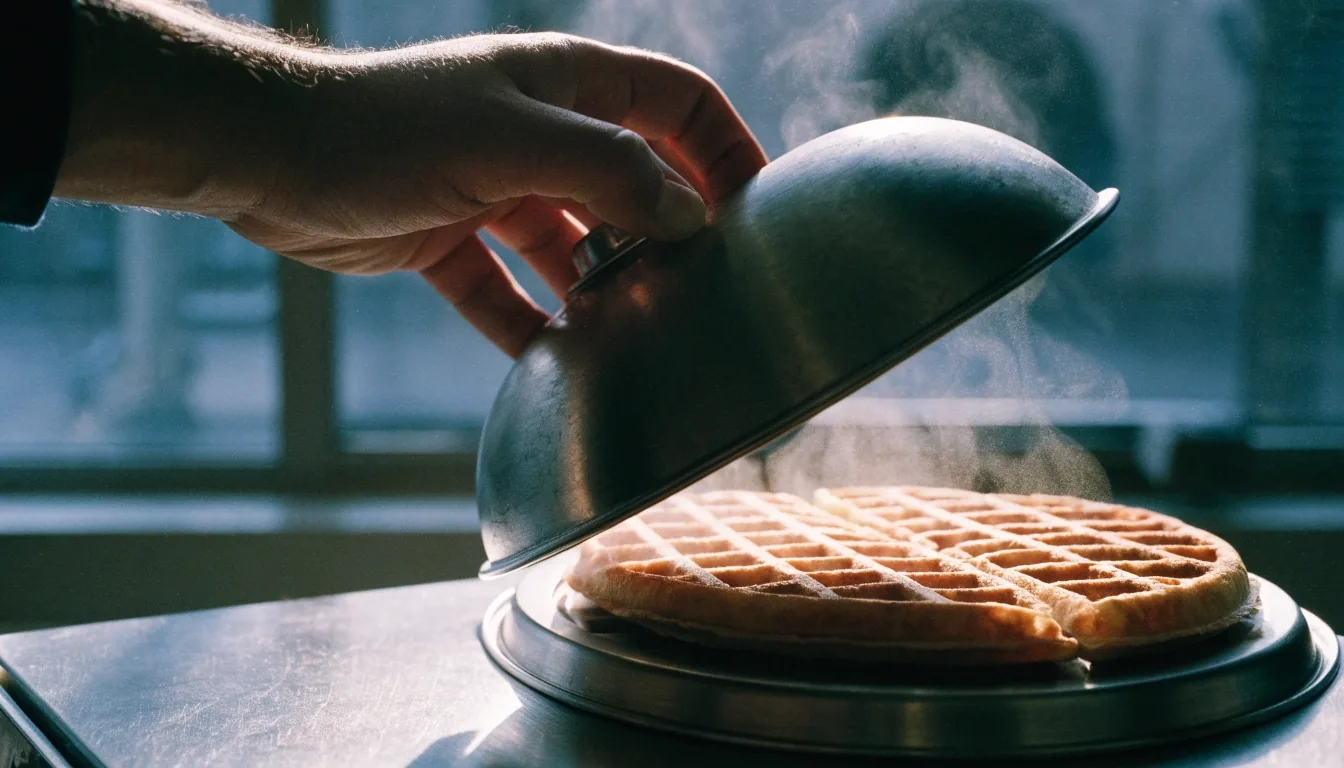
The release moment at the testing counter in Seattle — where a batch gets checked before a time note goes onto a page.
Before you write
What makes a note worth sending
Recipe corrections, cooking questions, and testing notes are all welcome. The notes that change a page tend to share the same handful of details, and every one of them is something a cook can write down in a minute.
-
If a cook time did not match your iron, say which iron you use and how long your batch took — a name and a minute are the two facts that let us correct a page.
Iron + time -
If a hashbrown waffle fell apart, describe the mix and the cook: how fine the shred was, whether the potatoes went into the iron wet, and how long they sat before you lifted the lid.
Mix + cook -
If a batter came out too loose or too tight for a savory waffle recipe, tell us what you changed — the swap matters more than the result when we retest the ratio.
What you swapped -
If you cook the waffle-iron recipes on a griddle or in a skillet instead, say so. A method that works on another surface is worth writing down for cooks who own one pan.
Another surface -
A short report from a real kitchen is the most useful note of all. If you cooked one of the recipes for an easy waffle-iron breakfast on a weekday morning, tell us how it went and what you would do differently.
A kitchen report
Where the testing happens
The kitchen address
The kitchen where the recipes are tested sits on Delridge Way in West Seattle. This is a home kitchen, so there is no counter to walk up to and nothing kept warm on a pass. Read the recipes and cook in your own kitchen — that is the point of the site.
Mailing address
Farrell Buettgen Savory Waffle Kitchen
6727 Delridge Wy SW
Seattle, WA 98106, USA
- Kitchen line
- +1 206 334 6767
- Weekday hours
- Mon – Fri, 9:00 AM – 6:00 PM
- Walk-ins
- None — it is a home kitchen
If you need to mail a written note, a paper towel folded around a printout of the recipe is how most of them arrive. The address above will reach us either way.
After you press send
What happens to your note
Most notes get a reply within a few business days. Nothing is archived and forgotten: a note that points at a step which reads differently than it cooks goes back onto the page it came from.
-
1
Your note gets read
A recipe question gets a direct answer, written back to the email you gave us. If the answer is short, you get a short reply.
-
2
A step gets retested
If your note turns up a step that reads differently than it cooks, the batch gets cooked again here before anything on the page changes.
-
3
The page is updated
A correction that changes a recipe gets noted on the page, so the next cook reads the version that worked.
-
4
A good question is kept
If you asked something other cooks will ask too, the answer may go onto the FAQ so it helps more than one kitchen.
Check this first
Before you write, check the FAQ
A few questions come up again and again, and the answers are already written out. If one of them is yours, that page will be faster than waiting on a reply.
Read the FAQ first-
Keeping hashbrown waffles crisp
Why squeezing the shred dry matters more than the iron setting, and what a wet mix does at the edge.
-
Which cheese holds up
How a sharp cheddar behaves in a savory waffle recipe against a softer melting cheese, and what to watch at the seam.
-
Cooking without flour
What holds a potato-based waffle together when there is no batter, and which recipes on the site already work that way.
-
Why a waffle sticks
Seasoning, heat, and the first pour — the three things that decide whether a batch lifts clean off the grid.
The FAQ also carries a couple of details on timing and reheating that do not fit on a recipe page. It is worth a look before you send.
What this resource is
A recipe resource, tested in one home kitchen
There is nothing to buy here and nothing to pick up. What the site offers is tested method: how to get a crisp shredded-potato edge on a hot iron, how to build a savory waffle batter that will not go slack, and how to cook the same mix on a griddle when that is the surface you own.
If you cook one of the hashbrown or waffle-iron recipes and want to tell us how it went, that is the most useful note of all. A short report from a real kitchen helps us keep the timing notes honest — and timing is the part of a recipe that is easiest to get slightly wrong.
Where to go next