
Farrell Buettgen Savory Waffle Kitchen Farrell Buettgen Savory Waffle Kitchen
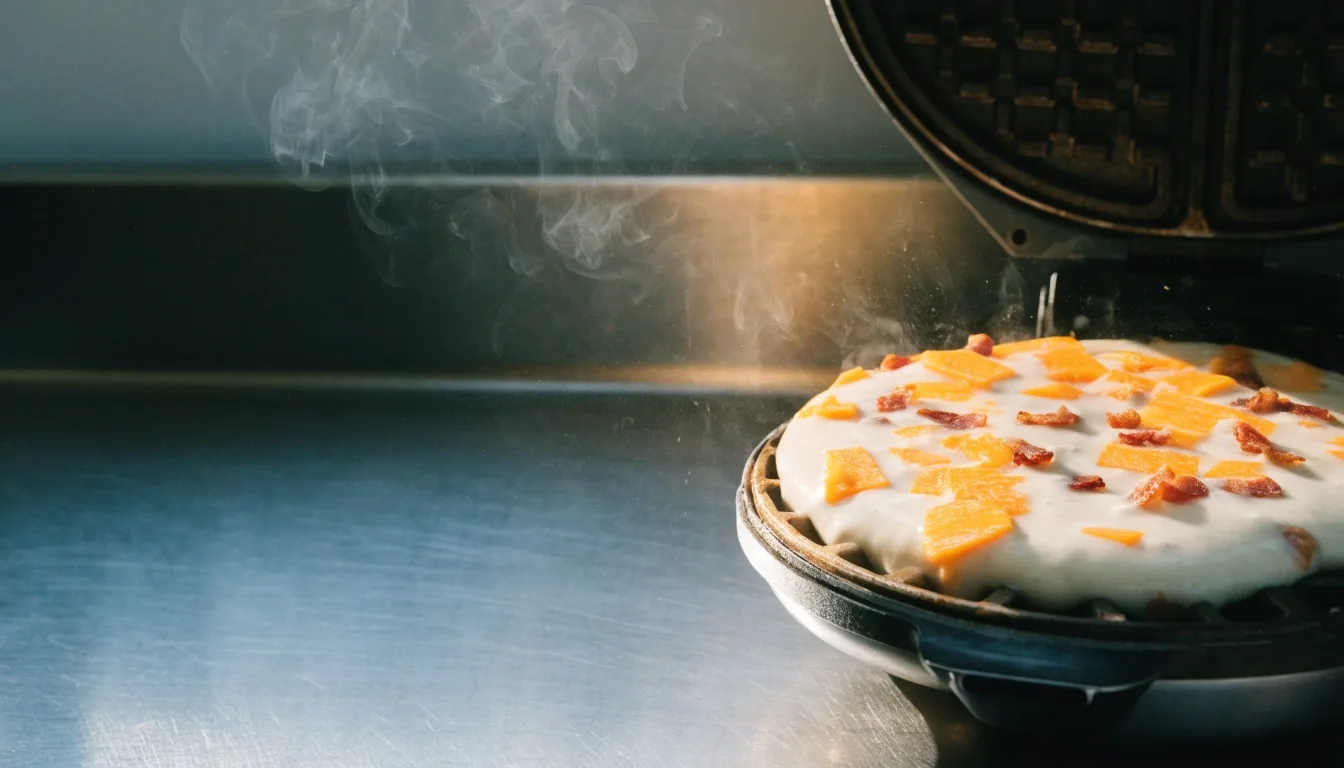
An open waffle iron mid-pour on a steel counter, a disc of buttermilk batter studded with cheddar and bacon set into the hot grid while steam rises

Shredded potatoes, hot iron, crisp edges.

Cheddar Bacon Savory Waffle From a Buttermilk Batter

Flour, baking powder, buttermilk, egg, sharp cheddar, scallions and crumbled bacon — shaped into discs and set in the center of a hot iron instead of poured edge to edge.

Iron time 04 – 06 min

20 min

Hands-on time

What you are making

A savory buttermilk waffle set with sharp cheddar, scallions and bacon crumbles, mixed like a quick bread and shaped into rounds before it meets the iron. The batter is deliberately thick, so it holds its shape on the parchment instead of running across the plates. This is the homemade version of the savory waffle iron recipes people go looking for after a first taste.

Why it works

Buttermilk brings enough acidity to lift the batter with baking powder, and there is no sugar to compete with the cheese. That acidity and the dry, well-set crust are also what gives this waffle the closest thing to the flavor people chase in a waffle house style waffle batter recipe — tang, salt and a crisp edge, all built from a home bowl.

What makes this one savory

There is no sugar in the batter, and that is deliberate. Sharp cheddar brings salt and a clean melt, and it stays distinct when it goes into the bowl cold and shredded rather than at room temperature in a block. Scallions add a fresh onion bite that cuts straight through the richness. Crumbled bacon contributes smoke and fa.

Buttermilk supplies tang and enough acidity to activate the baking powder, which is what lifts the waffle and keeps the crumb from turning dense. Everything in the bowl points away from sweet — which is also why this sits so well next to a plate of waffle house cheese hashbrowns recipe favorites, the cheese pulling both ways.

What each ingredient is doing

  • 01 Sharp cheddar — salt and a clean melt, cold and shredded so the strands stay legible in the crumb.
  • 02 Scallions — white and green sliced thin, so the bite spreads instead of pooling in one corner.
  • 03 Bacon crumbles — cooked crisp and drained, because wet bacon steams the batter from the inside.
  • 04 Buttermilk — tang, and the acidity the baking powder needs to lift the waffle.
A hand lifting the lid of a waffle iron as a savoury cheddar and bacon waffle releases from the hot grid in a curl of steam

The release. Steadied hand, one half second, and the crust decides.

The bowl

Ingredients, and why each one is here

You need all-purpose flour, baking powder, salt, buttermilk, one egg, melted butter or cream, sharp cheddar, scallions, and cooked crumbled bacon. The cheese should be cold and in shreds so it stays distinct. The bacon should be cooked crisp and drained on paper, because wet bacon steams the batter from inside. Scallions go in sliced thin, white and green parts both, to spread the flavor evenly.

  • 120 gall-purpose flour
  • 1 tspbaking powder
  • 240 mlbuttermilk
  • 1egg
  • 90 gsharp cheddar, shredded cold
  • 4scallions, sliced thin
  • 4 slicesbacon, cooked and crumbled

Order of operations

  1. A Whisk the dry ingredients in one bowl.
  2. B Whisk buttermilk, egg and melted fa in another.
  3. C Combine with a few strokes, then fold in cheese, scallions and bacon.
  4. D Stop mixing while streaks of flour remain — overworking develops gluten and makes the waffle tough.

The batter will be thick — thicker than pancake batter. That thickness is what lets you shape discs instead of pouring, and it is the single difference between this and a thinner buttermilk batter you might know from a plain waffle iron recipe.

Shaping discs for the iron

Scoop the batter onto a sheet of parchment and pat into rounds about the size of your iron's plates. Cold batter holds shape better, so a few minutes in the fridge helps. Place one disc in the center of the greased iron — as the lid closes, the batter spreads outward, filling the plates.

You get a thicker waffle with a defined edge, and less overflow than pouring.

Cooking times and telling when it is done

Cook for about 4 to 6 minutes, depending on your iron. The signal is steam: when it slows to a trickle and the edges look dry and set, lift the lid. If the waffle resists, give it another minute rather than prying — the crust has not released yet.

Aim for deep golden brown. Pale waffles taste raw in the middle with this much cheese.

Keeping cheese from sticking

Cheese is the main sticking risk in this recipe. Grease both plates generously before the first waffle, and re-grease between waffles. A silicone brush reaches the corners where spray misses.

Let the finished waffle sit on the open iron for 30 seconds before lifting, so the crust firms and releases on its own. Never stack hot waffles; the trapped steam softens the surface you worked to build.

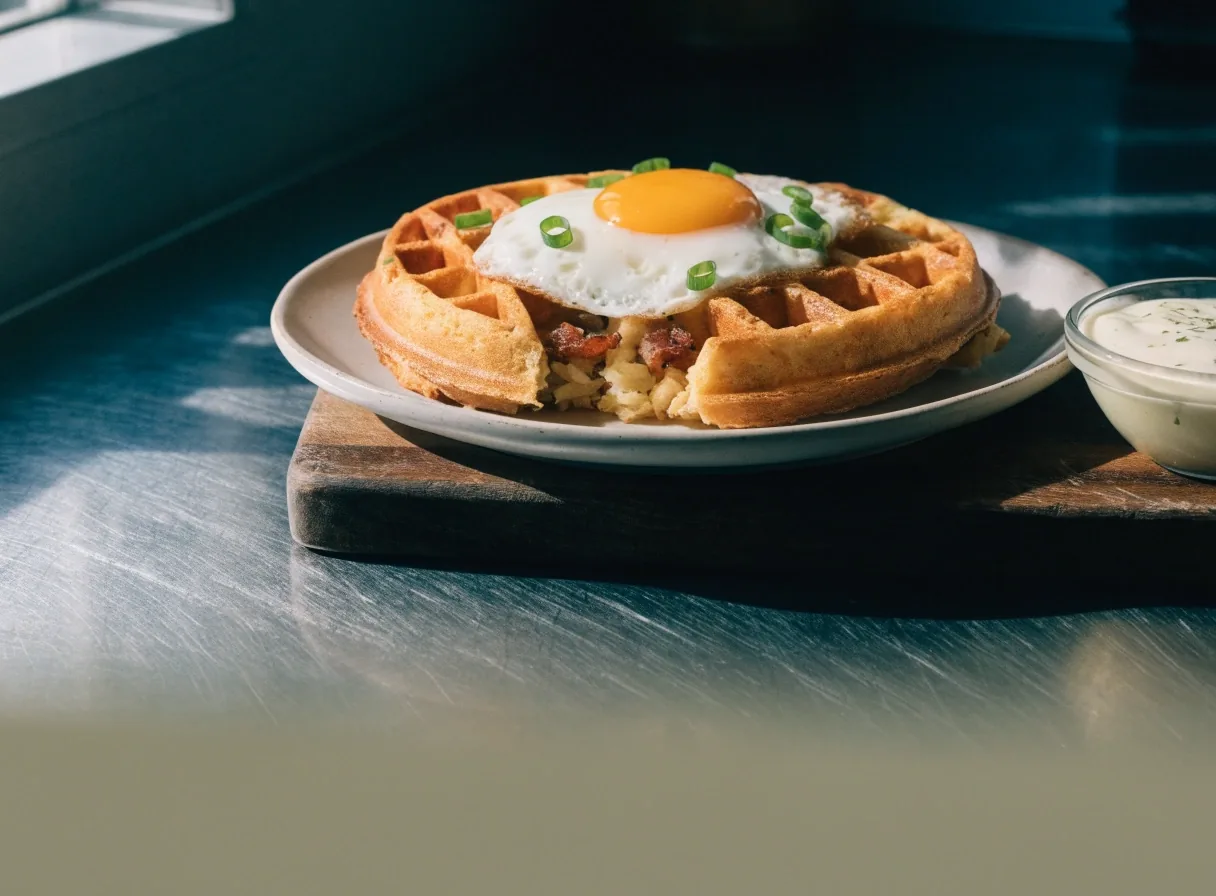
A savoury cheddar and bacon waffle torn open to show the shredded-potato interior, topped with a fried egg and scallion coins

On top and alongside

Toppings that fit a savory bread

Treat this like a savory quick bread and top accordingly: a fried egg, a spoon of yogurt ranch, sliced tomato, a scatter of extra scallions. Butter alone works. Hot sauce is welcome. What it does not want is syrup, which fights the cheddar and bacon.

If you serve it as a side to soup or salad, cut it into wedges and it behaves like a savory biscuit — that is also the shape it takes when it sits next to a plate of homemade waffle house style hashbrowns on a long weekend morning.

Try it with yogurt ranch

Make ahead and reheat

1 day

The batter keeps a day in the fridge. Bring it back to room temperature before it hits the iron, or it will not spread evenly.

Freezing

Toaster

Cooked waffles freeze well. Cool completely on a rack, stack with parchment, and freeze in a bag. Reheat in a toaster or a hot iron to restore the crust — a microwave will leave it soft and doughy, so avoid it.

Where this one sits

A buttermilk base you can carry into the rest of the savory set

The mix-and-shape method here is the same one the rest of the savory recipes on this site use. Change the additions and the base still holds: swap the cheddar and bacon for taco-seasoned beef, fold in masa harina for a corn-forward version, or press the same batter into a heart-shaped iron. Once you can read the steam signal, every other savory waffle in the collection gets easier.

This is also where the brief for a copycat waffle house breakfast recipe stops being a chase and starts being a home habit — a bowl you mix before the coffee cools, a hot iron you already know how to read.

Still learning the iron

Read the technique notes before your next batch

Greasing, batter thickness, the steam signal, and how to rescue a waffle that sticks — the whole method on one page, written so you can carry it into any of the savory builds.

Savory Waffle Techniques

Know your plates

Waffle-Iron Equipment Notes

Non-stick, cast aluminum and cast iron behave differently on this batter. The notes cover plate depth, heat recovery, and why an older iron can still pull a crisper edge than a new one.

Equipment Notes

Questions along the way

The FAQ covers the sticking points

Rope-thin buttermilk substitutions, cold batter versus room temperature, resting waffles, and how far the batter can sit before you cook the last disc. Read it once and the next batch runs cleaner.

FAQ