Farrell Buettgen Savory Waffle Kitchen Farrell Buettgen Savory Waffle Kitchen
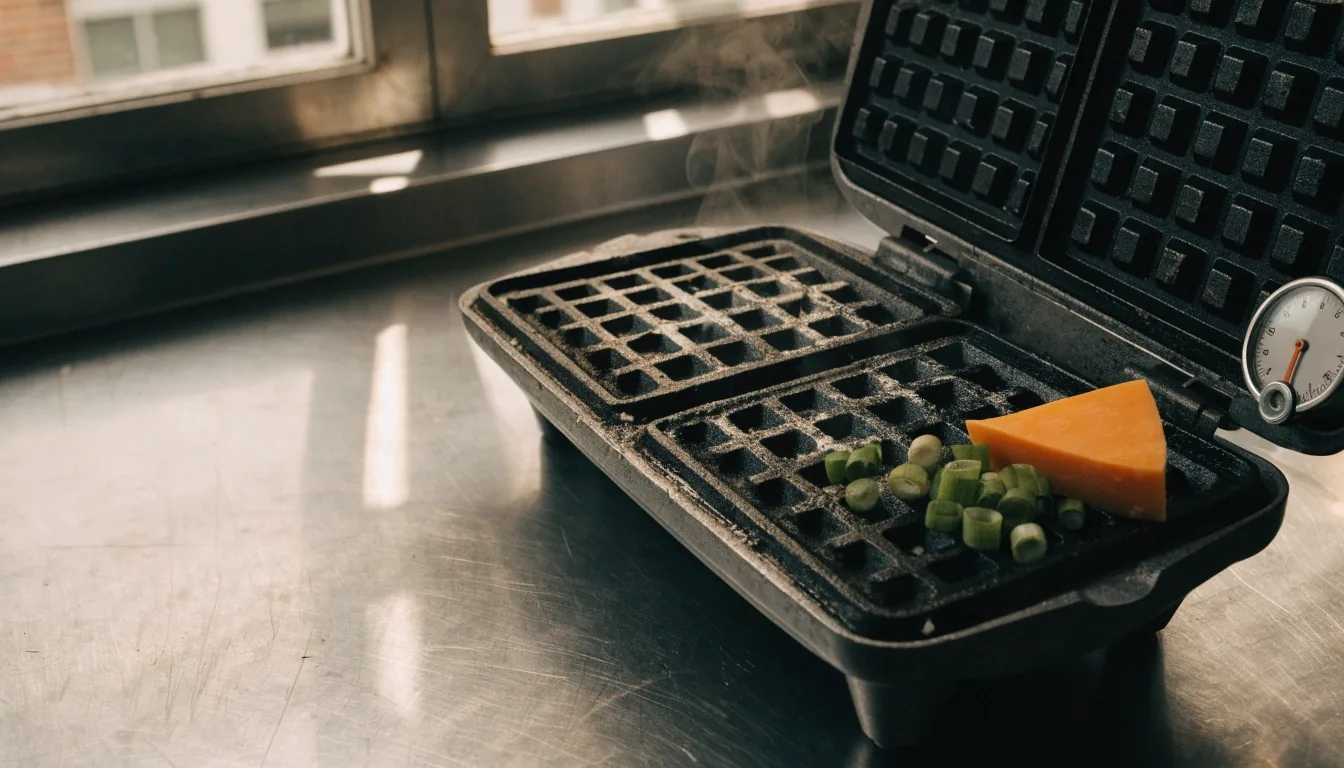
Open cast-iron waffle maker on a steel counter with a dial timer clipped beside it

Waffle-iron equipment notes

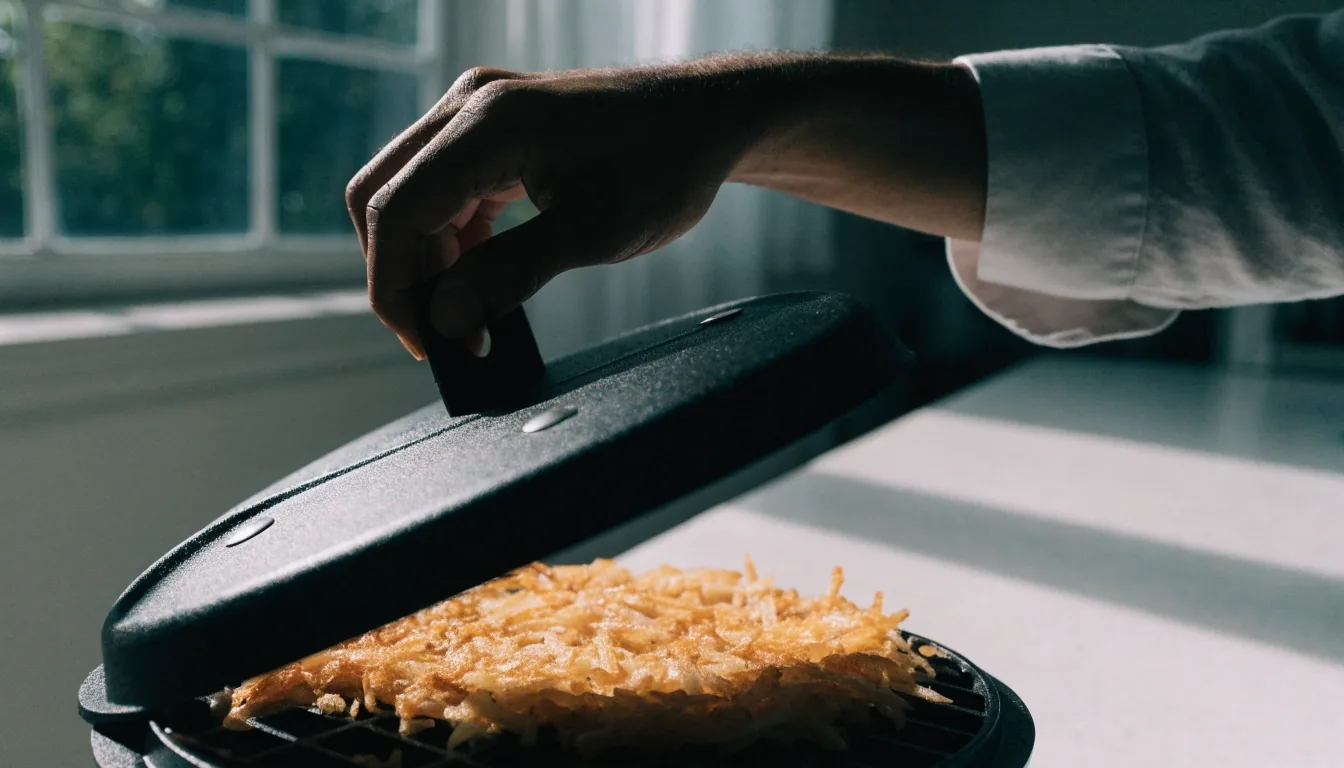
Shredded potatoes, hot iron, crisp edges.

A heavier, cheesier batter asks more of the machine than a sweet one. Here is what to look for and how to set the iron up before the first pour.

What a savory batter asks of an iron

Choosing and preparing a waffle iron for savory batters

A savory waffle with cheese, potato, and butter is harder on an iron than a sweet one. The batter is heavier, the cheese leaves residue, and the mixture needs a hot, well-greased plate to release.

You do not need

You do not need an expensive machine, but a few features make the difference between a smooth cook and a frustrating one. An adjustable dial, a plate deep enough for the recipe, and a greasing routine cover most of it.

This page covers what to look for and how to set the iron up before the first pour.

The three you'll feel

  • 01Heat that holds, or a preheat that stretches to ten minutes
  • 02Plate depth against the batter you actually mix
  • 03A greased plate — not a wet one, a filmed one

Heat and the plate under it

Heat: steady and adjustable

Potato and masa batters brown differently. A fixed heat leaves you no room to correct the second waffle.

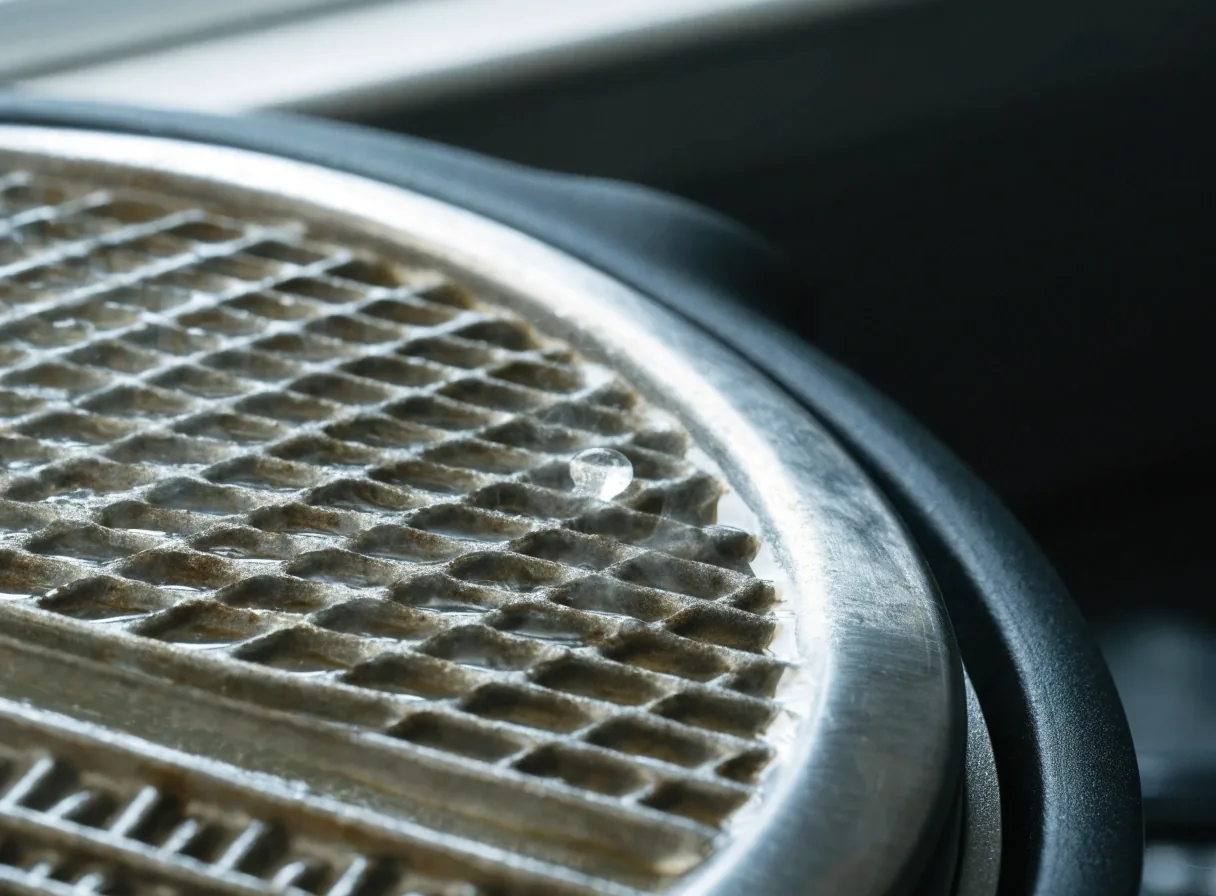
Close view of a hot waffle-iron grid with a thin sheen of oil across it

A drop of water, a sizzle, a vanish

You want a setting that gets the plates hot enough that a drop of water sizzles and vanishes before you add the batter. If the iron only has one setting, preheat it fully — that often takes 8 to 10 minutes — before the first batch of a homemade waffle-house-style breakfast.

  • Dial off, then fully preheated: 8–10 min
  • Water beads should hiss and dry

Depth against the batter

Plate style and depth

Deeper plates hold more batter and give a thicker waffle, which suits a cheddar bacon disc or a masa cake. Shallower plates cook faster and produce a crisper, thinner result, which suits a hashbrown waffle served as a base for eggs, greens, or a spoonful of yogurt ranch.

Deep plate

More batter, thicker waffle

Cheddar bacon disc, masa cake

Shallow plate

Faster cook, thinner result

Hashbrown waffle used as a base

Novelty plates

Usually thinner and faster

Cook times run shorter, check early

Whichever you own, match the recipe to the plate: a thick batter in a thin plate will overflow. Pour to the edge of the grid, not over it — the overflow lands on the counter and burns the moment the lid closes.

Greasing a savory plate without overdoing it

Prep the plate

Grease the plates before the first waffle and between each one, even on a non-stick surface. A thin, even film is what lets a cheese-heavy batter release without tearing the crust.

Get the corners

Use a neutral oil or melted butter and a silicone brush to reach the corners, where spray often misses and where the crust is most likely to tear. Deep pockets take a brush better than a can.

Not a pool

Too much oil smokes and burns, and it makes the crust greasy rather than crisp. Brush lightly, then let the plates heat for a minute before the batter goes on. After the first waffle, a quick re-brush is usually enough.

Reach for these while you cook

  • Tongs — release a stuck waffle without tearing it
  • Wire rack — keeps finished waffles crisp while the next batch cooks
  • A small bowl for the potato mixture, and a clean kitchen towel for squeezing
  • Silicone brush — greases the corners a spray can never reach
  • Dial timer — a physical timer keeps you off the phone mid-cook
  • A plate traps steam and softens the crust — that is the one thing to avoid

Coating, care, and when to replace the plates

What most home irons actually ship with, and how a savory cook should treat the coating.

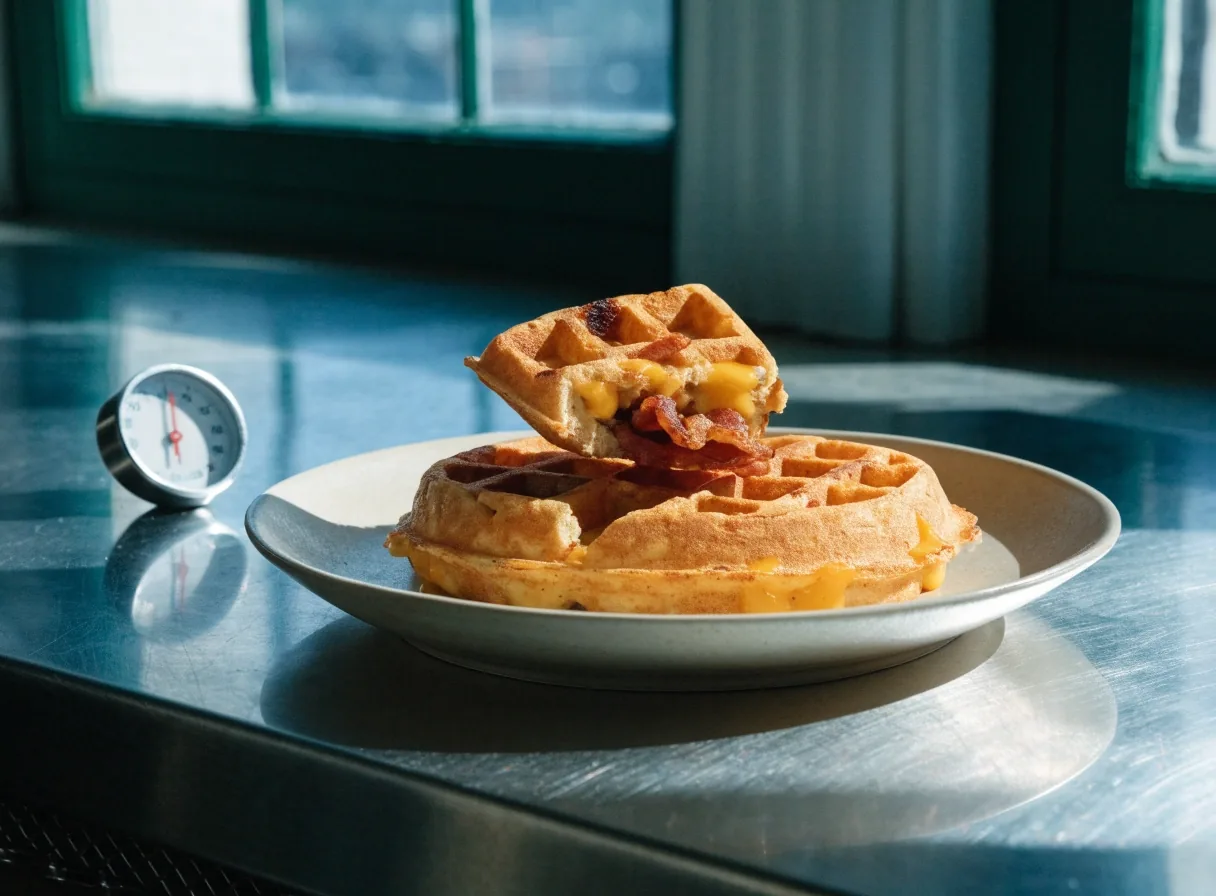
Cheddar bacon savory waffle just off the iron with a wedge torn open

Most irons come with a non-stick coating, and it helps, but savory batters with cheese and caramelized potato will still stick if the plates are dry. Treat the coating as insurance, not as permission to skip the brush.

180°C working edge

Cleaning, long-term

Let the iron cool completely before cleaning. Wipe the plates with a damp cloth or a soft brush to remove cheese and potato residue; never submerge an electric iron in water. For removable plates, follow the maker's instructions on whether they are dishwasher safe.

A clean plate releases the next waffle better than a greasy one — a quick wipe between sessions keeps the whole process smoother over time.

If the iron has seen better days

A worn coating will stick no matter how much you grease it. If the plates are scratched, uneven, or heating unevenly, a replacement is cheaper than the frustration of torn waffles. You do not need a top-tier machine for savory waffles — a mid-range iron with an adjustable dial and removable plates handles everything on this site.

Buy for the features you will actually use, not the ones on the box.

Next on the counter

Once the iron is set, the recipes do the rest.

The equipment notes here are the setup. For the squeeze, the shred, and the ratio of potato to cheese, the technique page carries the method — and the recipe pages carry the batter itself, from a cheddar bacon disc through masa harina cakes to a taco hash brown waffle.