

Farrell Buettgen Savory Waffle Kitchen Farrell Buettgen Savory Waffle Kitchen
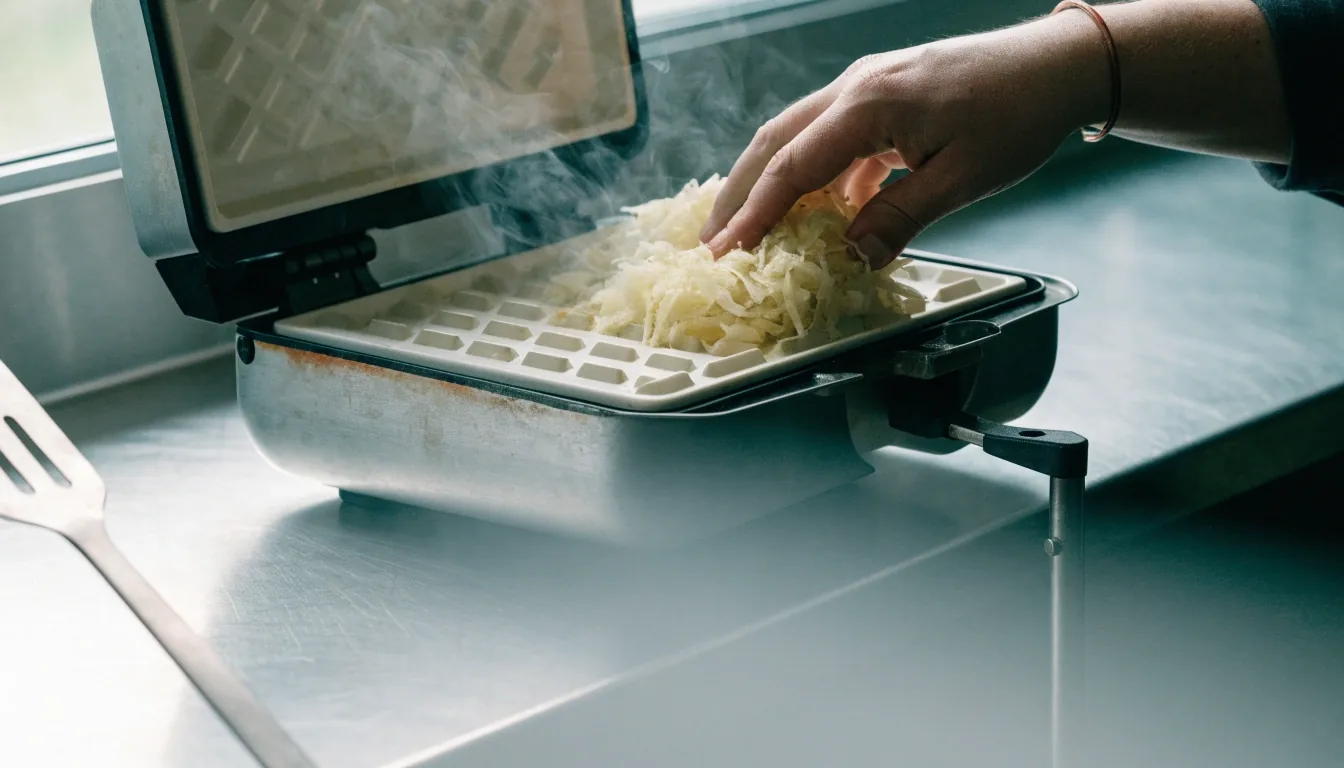
Shredded potato mixture spread across the hot grid of an open home waffle maker, steam rising on a steel counter

Grated potatoes · hot iron · crisp edges

Press Shredded Potatoes Into a Waffle Iron

Shredded potatoes, hot iron, crisp edges. The whole recipe is a moisture test, and once you pass it the rest is a short cook.

What this recipe is

~20MIN

Start to finish on one counter, family-style, no batter required.

A short ingredient list

You need shredded potatoes, one egg, a small amount of flour or starch to help bind, salt, pepper, and fa for the iron. That is it — everything else is optional and the base recipe plays well with whatever is already in the fridge.

Why russets

Russet potatoes give the crispest result because they are high in starch and low in moisture once squeezed. Yukon golds work but soften more, and frozen shredded potatoes hold more water than you would expect — thaw and squeeze those too.

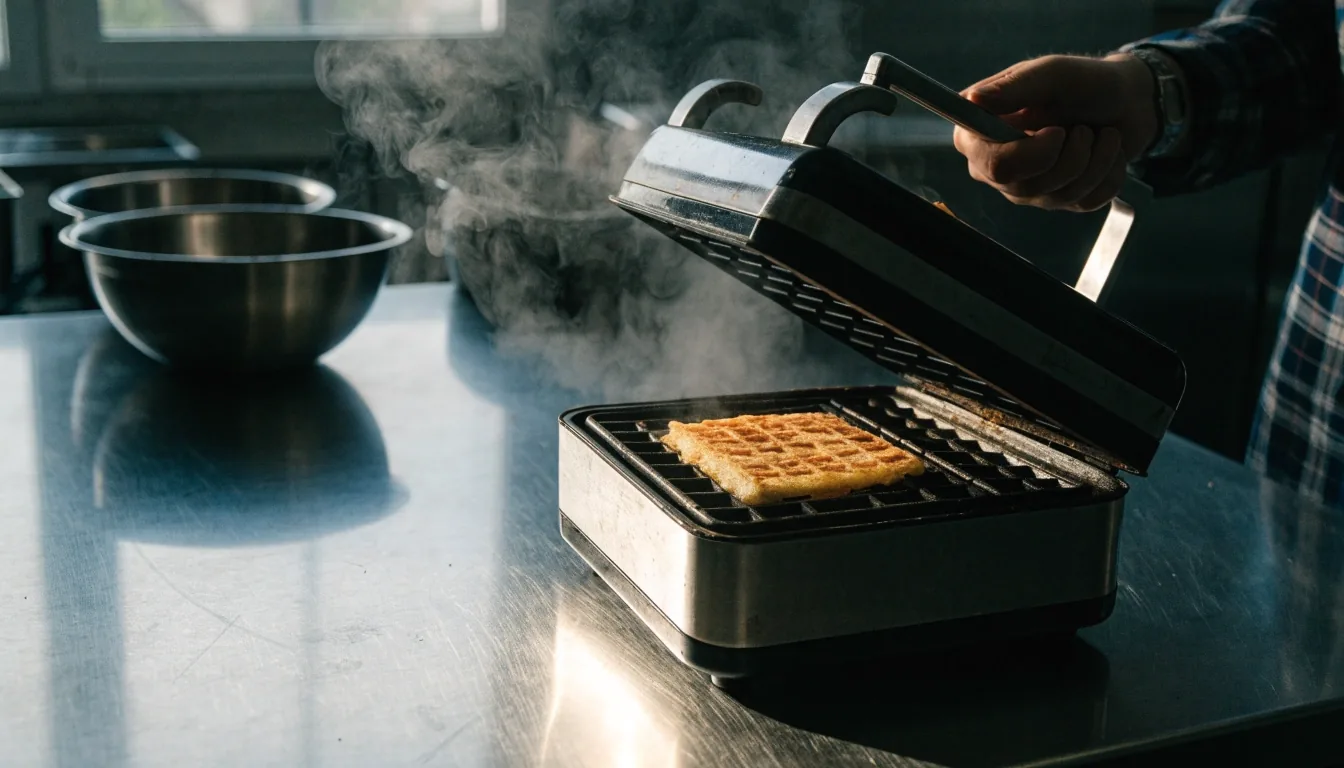
A cook lifting the lid of a hot waffle maker, a crisp-edged hash brown waffle clinging to the grid as steam rises

The release: edges crisp, surface dry, lid lifts without resistance — that is the moment the plate is done.

Moisture rule

Squeeze the water out, twice

Wrap the grated potatoes in a clean kitchen towel and twist hard. Press. Then empty the towel, fluff the shreds, and squeeze again. Water is the single reason hashbrown waffles come out soggy, and a second pass removes what the first one missed.

You can also salt the shreds, let them sit 10 minutes, then squeeze — the salt pulls moisture to the surface. Dry potatoes press into a firm, even layer; wet ones steam.

A tight squeeze is the whole difference between a waffle with crisp edges and a steamy interior, and it is the same moisture test that separates easy waffle house style breakfast from a soggy tray of potato shreds.

Method & assembly

Mix, press, cook, serve

Four moves from a bowl of shreds to a plate of crisp-edged hash brown waffles.

A hash brown waffle on a cream plate with one wedge torn open showing the shredded potato interior, greek yogurt ranch alongside

Mixing and binding

You are aiming for a mixture that packs, not one that pours

Break the egg into the squeezed potatoes, add a couple of tablespoons of flour or cornstarch, and season generously with salt, black pepper, and a pinch of onion or garlic powder if you like. Mix with your hands until the shreds are coated and the mixture holds when you press a fistful.

If it crumbles, add a little more egg. If it feels wet, add more starch, a spoon at a time. This is where the binding step decides how the whole waffle behaves in the iron.

Pressing into the iron

Even compression, not a squeeze

Preheat the iron until a drop of water sizzles and disappears. Grease both plates well, even if the iron claims non-stick. Spoon the mixture onto the center and spread it slightly, leaving a border so it can expand.

Close the lid slowly and let the weight of it press the potatoes flat. Do not slam it; you want even compression, not a squeeze that pushes potatoes out the sides.

  • 01Preheat until a drop of water sizzles and disappears
  • 02Grease both plates even if they claim non-stick
  • 03Spoon onto the center and leave a border
  • 04Close the lid slowly, do not slam it shut

Cooking

Until golden and crispy

Cook 8 to 10 minutes for a standard plate. Ready when the edges are deep golden brown, the surface looks dry, and the lid lifts without resistance. If the top is pale, keep going — pale potatoes taste raw.

For crispier edges, cook a minute past golden, but watch for burning on the highest setting. A thick potato waffle needs the full time, so resist checking too early.

Serving it family-style

Stack, top, cut into wedges

Stack the waffles on a rack in a warm oven while you cook the rest. Top with a fried egg, a spoon of yogurt ranch, salsa, or nothing at all. This is a base recipe, which means it plays well with whatever is in the fridge. Cut into wedges for kids.

Freezing and reheating

Cool leftovers completely on a rack, then freeze in a single layer before bagging so they do not stick. Reheat in a toaster or back in a hot iron for the crispest result. A microwave turns them soft and steamy, which defeats the technique.

Frozen hashbrown waffles keep about a month and make a fast weekday breakfast once the base recipe is in your routine.

Troubleshooting

When the waffle falls apart

If it crumbles

The mix was too dry or the cook was too short. Add another egg to the next batch, and give it the full 10 minutes.

If it sticks

The plates were under-greased or the crust had not set. Let it sit on the open iron for a minute before prying it loose.

If it looks soggy

The potatoes were still wet. Squeeze harder next time and rest the finished waffle on a wire rack rather than a plate, so steam escapes instead of pooling.

Measurements that matter

Numbers worth a pencil tick

A cheddar bacon savory waffle fresh off the iron with bacon crumbles visible in the batter and a dial thermometer at the frame edge

The same rule, a heavier batter

Once the base holds, additions hold with it

Add grated cheddar, cooked bacon crumbles, or scallion coins to the mix after it packs. Extra fa and moisture mean a slightly longer cook, so give a loaded waffle the full 10 minutes. The moisture rule that carries the plain hash brown waffle carries this one too.

Potato per plate

~220G

One medium russet, grated, squeezed twice. Enough for one full round in a standard home iron.

Iron, fully preheated

190°C

Wait until a drop of water sizzles and disappears before the first spoon goes down.

Full cook time

08–10 MIN

Resist checking early. Pale potatoes taste raw; deep golden edges are the signal.

Before you start

Three things people ask first

Everything below traces back to the same moisture test: if the shreds went in dry, the plate comes out crisp.

Can I make these ahead for a busy weekday breakfast?

Yes. Cook the full batch, cool the waffles completely on a wire rack, then freeze them in a single layer before bagging. Reheat in a toaster or back in a hot iron — a microwave softens the crust and undoes the technique. They hold about a month.

Frozen shredded potatoes, or grate my own?

Both work, and both want the same treatment: thaw frozen shreds first, then squeeze twice, because they hold more water than you would expect. Grated russets give the crispest result, but frozen is what makes DIY waffle-iron hashbrowns at home a real weekday option.

Does this method also work for a batter-style savory waffle?

It does, and the same binding logic and iron temperature carry over to waffle-iron batter recipes. The hash brown version skips the batter entirely — the potato is the batter — so it is the one to learn first if you want a savory waffle recipe you can measure by feel.