Farrell Buettgen Savory Waffle Kitchen Farrell Buettgen Savory Waffle Kitchen
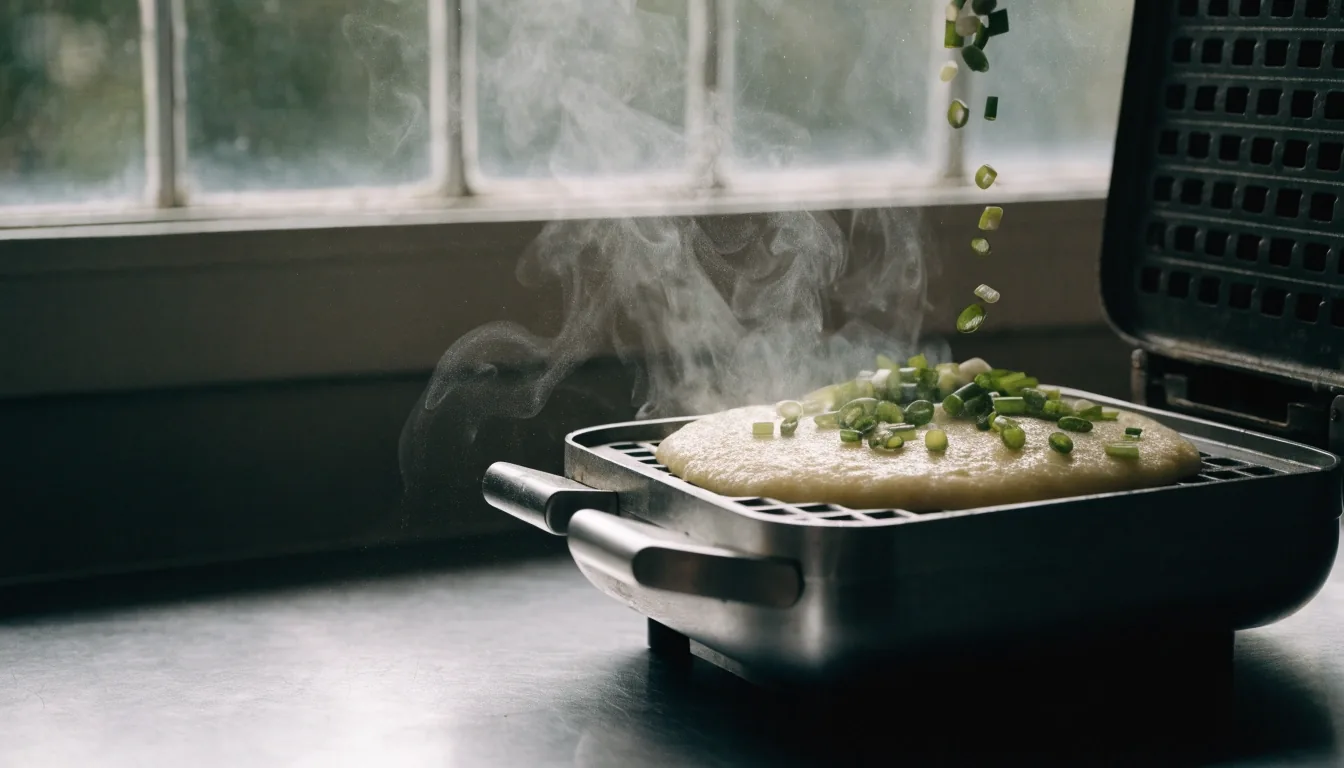
Masa harina batter with folded scallions just poured onto the open grid of a hot home waffle iron, steam rising in cool north daylight

Corn-forward savory batter

Masa harina savory waffles with a corn-forward crumb

Masa harina is corn flour treated with lime, and it brings a nutty, earthy flavor and a denser crumb than wheat flour ever will. It holds bold seasoning well and pairs naturally with salsa, crema and chili.

Iron time 06 min Rest 10 min before the iron Iron heat 190°C, medium setting

The corn problem

A corn flour base drinks more liquid than wheat and sets into a tender, faintly grainy crumb. This is the recipe to cook when you want a savory waffle that tastes like something new.

4–6minutes on the iron

Why it browns deeply

Corn long outpaces wheat on the griddle. The coloring comes early and keeps going, so check your waffle a full minute before you would normally open a flour batter. Pull it at the first dry patch on top.

  • 185°C — the lid creeps up from here
  • 190°C — where this batter should sit
  • 200°C — the color starts to run

What wants to be on top

Salsa verde, sour cream or crema, pickled onions, cilantro, a squeeze of lime, sliced avocado. A fried egg turns it into a full meal; crumbled cotija over the whole thing adds a salty finish.

A masa waffle wants the bright, acidic toppings. The heavier batter can carry them without going soggy.

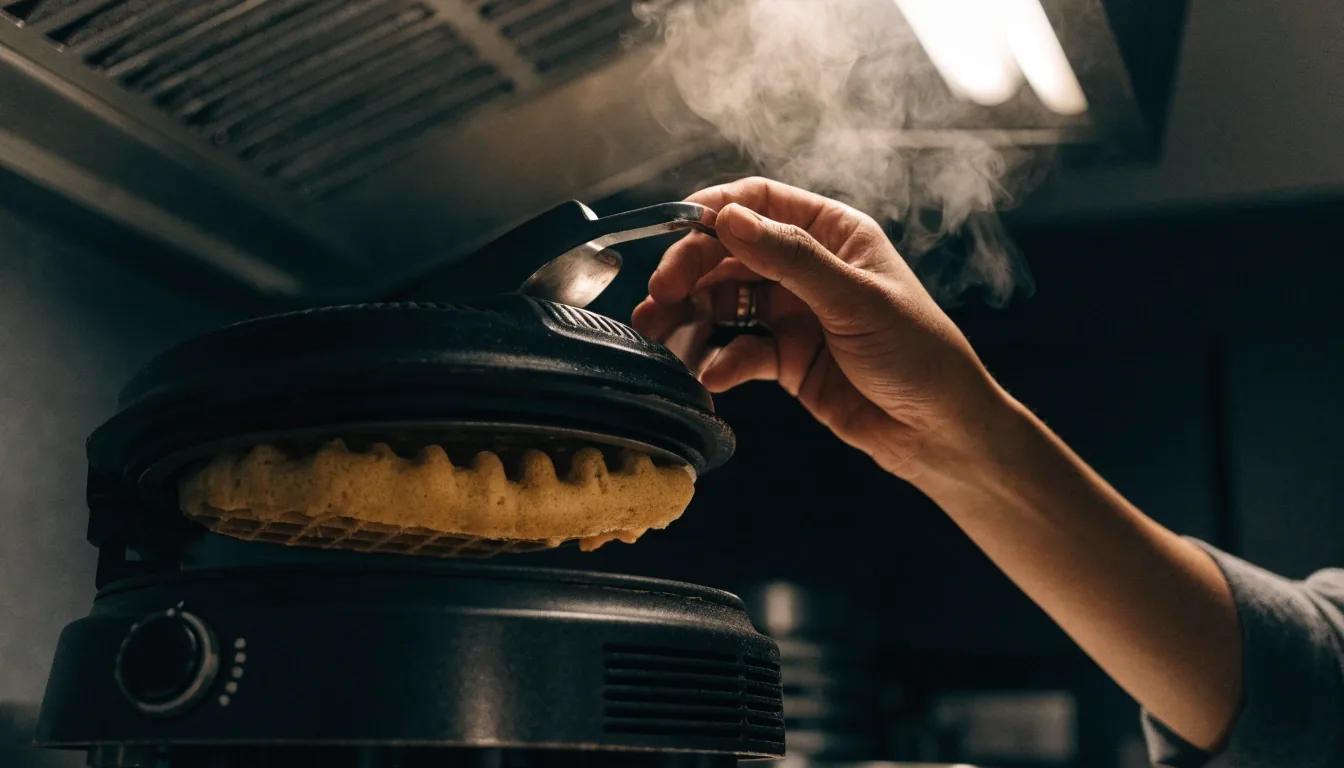
A hand lifting the lid of a home waffle iron as a corn-flour waffle clings to the hot grid before it drops, steam catching the hood light

The half-second grip that tells you the crumb is set Check at four minutes; pull at six

What masa harina does to a waffle

A tender, faintly grainy crumb — closer to a thick corn cake than a Belgian batter

Corn flour absorbs more liquid than wheat, and the batter that comes off it sets a little differently. What sets is not a crisp shell around a soft center — it is a tender cake with a crumb shot through with corn.

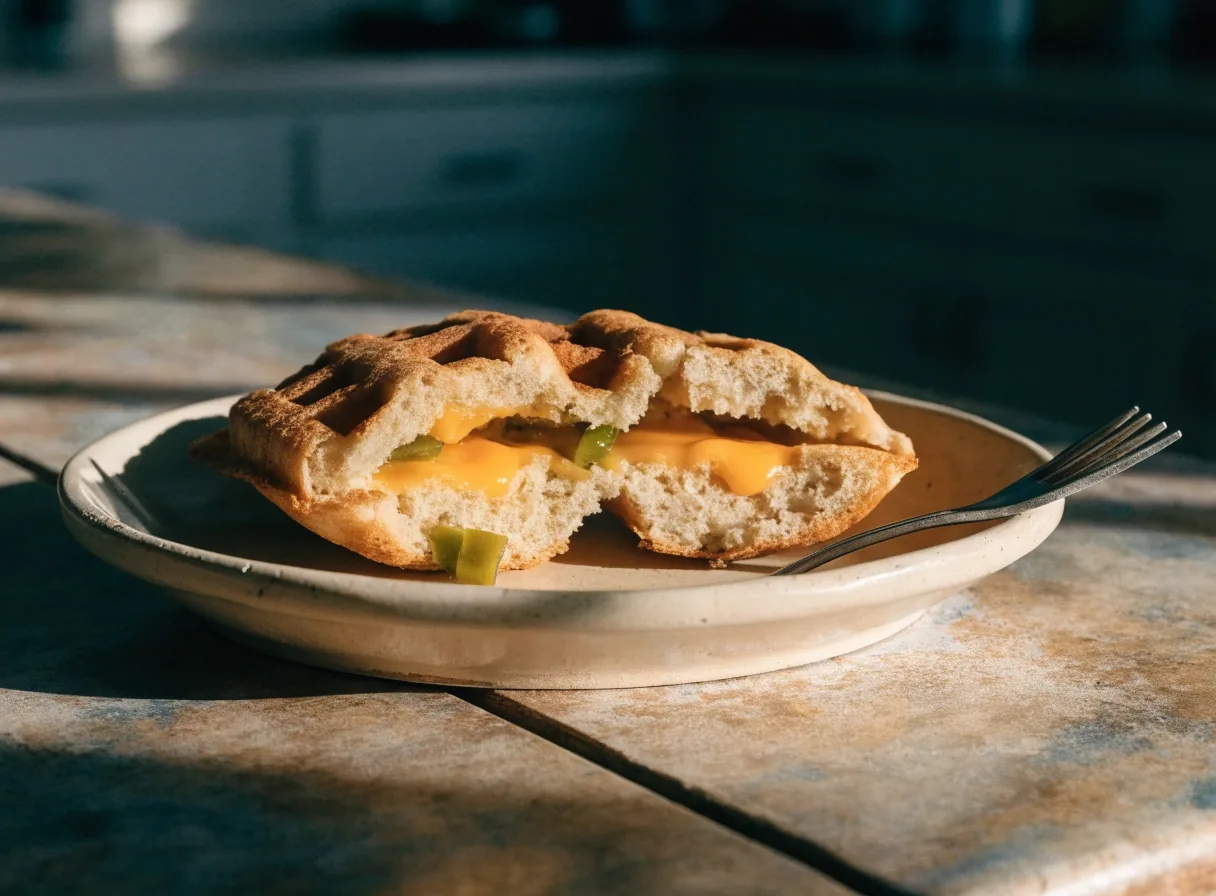
A corn-flour waffle torn open on a cream plate, showing a tender grain threaded with green chile and melted cheddar

Reading the interior

A wheat waffle wants a shell that shatters and a center that steams. A masa waffle wants something else: at the bite, the corn crumb should yield, not snap, and the crust should be dry enough on the surface to hold a loaded topping without going soft within a minute.

  • 4min — first check
  • 6min — pull window ends
  • 100g masas per waffle, dry
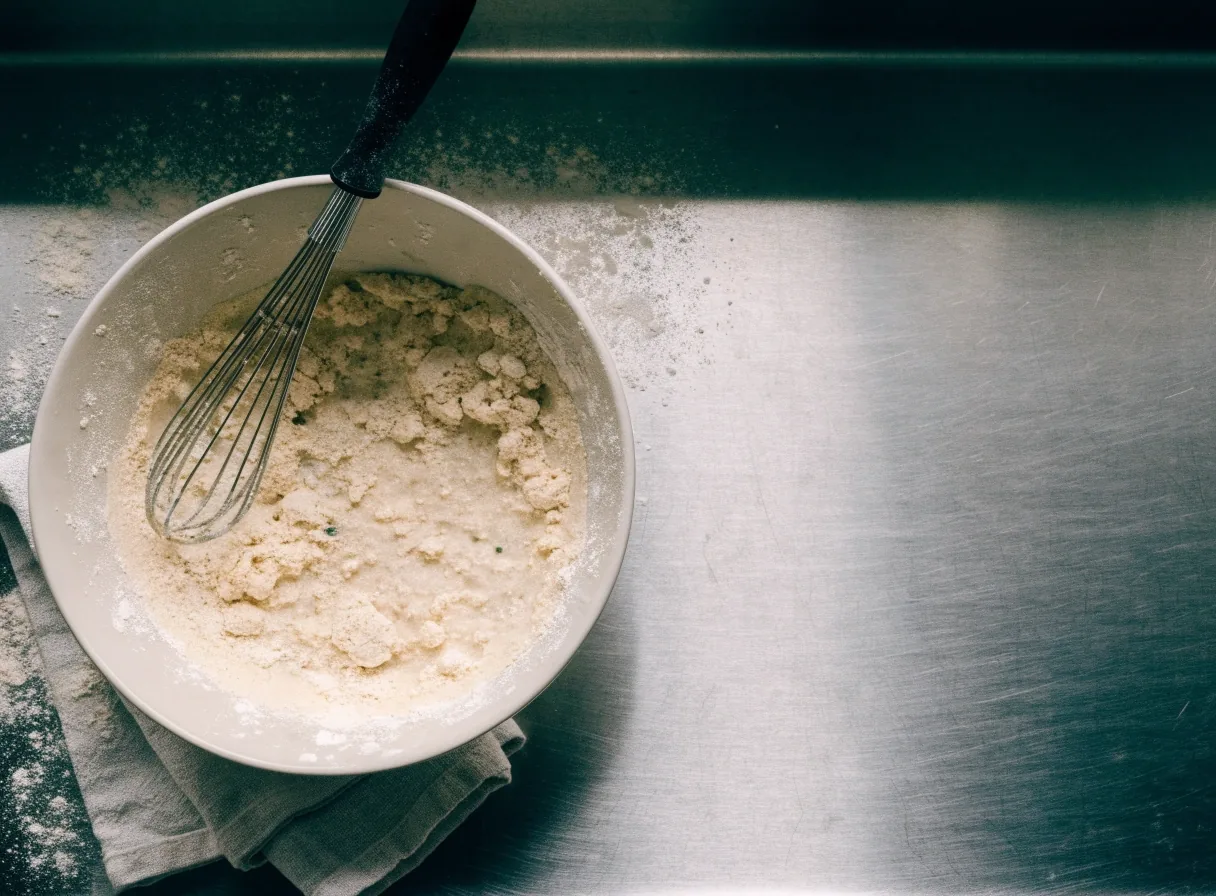
A mixing bowl of lumpy masa harina batter with a whisk resting at the rim on a brushed steel counter

Why it browns deeply — and early

Corn sugars color faster than wheat starches, so masa takes a dark edge before a flour batter has finished its first side. On a medium-setting iron, watch for the tell: the top surface goes from wet to matte in a band, and the color on the edge stops deepening a beat after it sets.

If the edges darken before the center sets, the iron is too hot — knock it back a step and finish on the lower setting.

Texture at the fork

Tender, not wet

The interior should read as done without reading as dry. If the middle looks glossy at the break, give the waffle another minute inside the closed iron before you pull it.

The lime, in plain terms

The lime treatment is why masa tastes like a finished ingredient rather than raw cornmeal. It is the reason this batter is sweet on its own without any added sugar — and the reason a flour swap here does not land the same way.

Where to find it

Look for masa harina on the baking aisle of a general grocery or in the Latin-cooking section. The bag should be labeled masa harina, not cornmeal and not corn flour — the three are different grinds and do not swap cleanly in this recipe.

Building the savory batter

Mix less than you think, then let it sit ten minutes

Masa harina, baking powder, salt, buttermilk or milk, one egg, melted butter, and a handful of mix-ins. Whisk the wet into the dry and stop while the batter is still a little lumpy. Masa thickens fast, and over-mixing makes it gluey.

Pick the mix-ins you have on hand

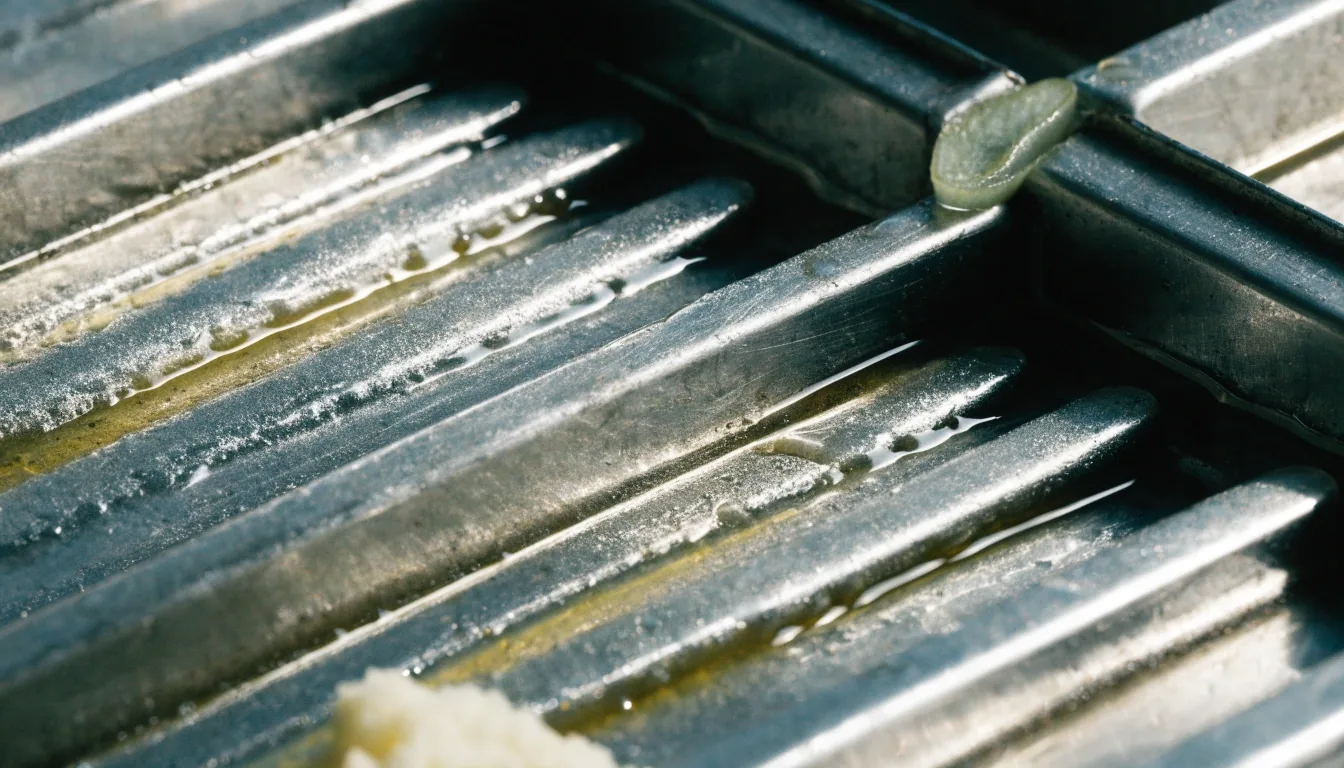
Close detail of a hot waffle-iron grid with oil sheening across the scored channels

Wet into dry

Whisk the milk, egg and melted butter first, then pour the whole lot into the dry. Stop at lumpy. Ten minutes of rest is not optional — masa keeps absorbing liquid while it sits, and the batter rides differently once it has.

  • Masa harina150 g
  • Buttermilk or milk280 ml
  • Melted butter45 g
  • Baking powder8 g
  • Salt4 g

Cheese, chile, corn, cotija

Every mix-in here plays well with the corn base. Sharp cheddar and cotija both bring salt; roasted green chiles and corn kernels bring a second layer of sweetness against the masa.

  • Sharp cheddar — 60 g, grated fine so it melts evenly through the crumb.
  • Cotija — 30 g, crumbled, for a saltier finish than cheddar alone gives.
  • Corn kernels — ½ cup, pat dry on a towel so the batter does not go loose.
  • Roasted green chiles — ⅓ cup, drained of any packing liquid.

Scallions, held back for the end

Fold scallions in last. Folded in early, scallions soften and disappear into the batter; folded in at the end, they keep their bite and give the waffle a bright, green edge against the corn.

Two scallions, root trimmed, sliced on the bias.

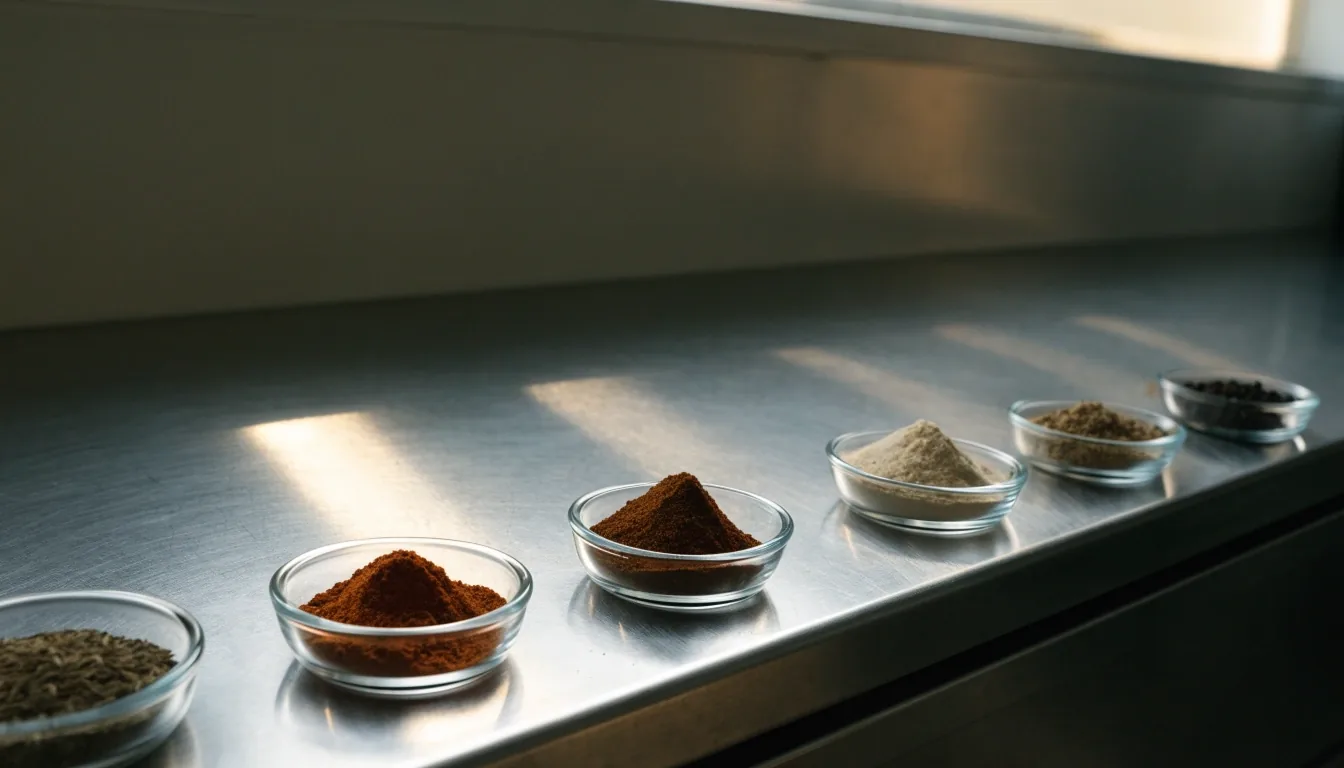
Five small pinch-dishes of dry seasoning arranged along a brushed steel counter with the waffle iron out of focus behind them

This batter welcomes bold seasoning

Cumin, chili powder, garlic, a pinch of smoked paprika, black pepper. The corn flavor is mild enough to support all of it without being overwhelmed. Go easy on salt if your cheese is salty, and taste the batter before it hits the iron.

A starting ratio that works: half a teaspoon of cumin, half a teaspoon of mild chili powder, a quarter teaspoon of garlic powder, a quarter teaspoon of smoked paprika, and black pepper to taste. Push the chili up or down by fifty percent depending on the chiles you fold in.

Salt, checked

4 g

Salt, before you count the cheese. Sharp cheddar brings its own — if the mix-in is generous, hold the salt a gram back and taste.

Scallions, at the end

2

Folded in last, once the batter has rested and the flavors have settled. The green stays green and the bite stays sharp against the corn.

Taste before the iron

A teaspoon off a clean spoon tells you everything — the corn shows up before the seasoning does, and the salt level reads clearly for a second or two before it washes out. Adjust now, not on the plate.

Corn waffles vs. potato waffles

Two savory bases that solve different cravings

Both count as savory waffles, and they are worth keeping in rotation together. A potato base is crisp, salty and rich; a masa base is tender, earthy, and a little sweet from the corn.

What you are comparing Masa harina base Shredded potato base
Crumb Tender and faintly grainy, closer to a thick corn cake. Crisp and shattering at the edge, soft inside, closer to a hash brown.
Flavor Nutty and earthy, with a mild, natural sweetness from the lime-treated corn. Salty and rich, with the browned-potato note dominating.
Wants on top Salsa verde, crema, pickled onions, lime, avocado, a fried egg, cotija. Cheese, bacon, a runny yolk, more sharp cheddar, hot sauce.
Handles liquid Absorbs fast and thickens; add milk back if the batter sits. Holds its shape once squeezed dry; keeps crisp through toppings.
Best cooked Soon after mixing — masa keeps thickening in the bowl. As soon as the shreds are dry — a wet potato base steams, it does not crisp.

Cooking and getting the crumb right

Preheat, grease, pour — and check earlier than you would for wheat

Pour or scoop the batter to fill the plates, spreading toward the edges with the back of the scoop. Cook about four to six minutes, until the edges are set and the surface is dry. Because masa browns quickly, check earlier than you would for a wheat batter.

  1. Preheat and grease

    Bring the iron to its medium setting and let it sit there for a full five minutes before the first pour. Grease the plates lightly with butter or a neutral oil and let the sheen settle. A cold iron steams the masa batter instead of setting it.

  2. Pour to the edges

    Fill the plates about three-quarters full and spread the batter out toward the corners with the back of the scoop. The batter does not flow like a thin wheat one; it stays roughly where you put it, which is what you want here.

  3. Check at four, pull before six

    Open the iron around the four-minute mark to look. You are checking for a surface that has gone from glossy to matte and edges that are set. Anything past six minutes on a masa waffle starts to dry and darken.

  4. Rest a minute before serving

    Let the waffle sit on a rack for a minute. The crumb firms up as it cools, the crust stays crisp, and a loaded topping has something to sit on instead of a face that is still steaming underneath.

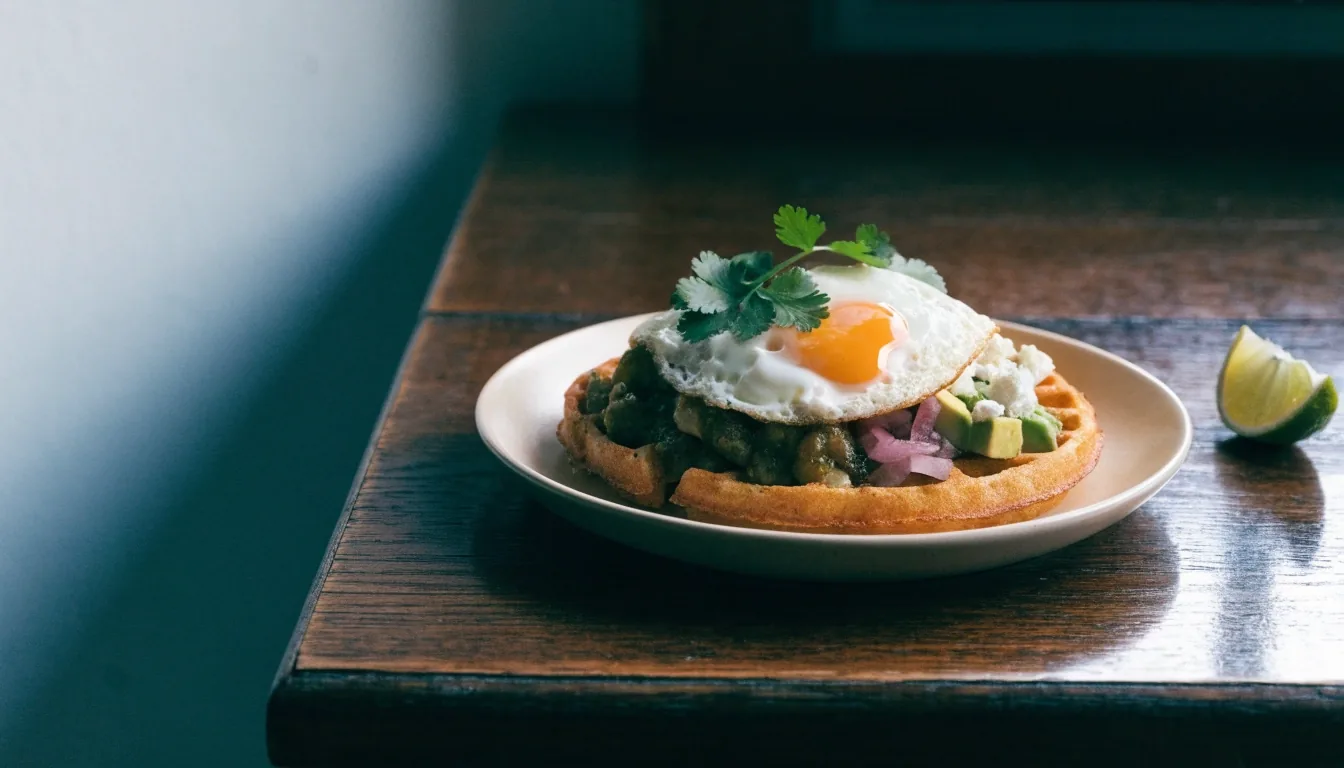
A masa harina waffle under salsa verde, crema, pickled onions, avocado, cilantro and cotija with a fried egg on top

Toppings built for a corn waffle

Think of what you would put on a corn cake, then go from there

Salsa verde, sour cream or crema, pickled onions, cilantro, a squeeze of lime, sliced avocado. A fried egg on top turns it into a full meal. Crumbled cotija over the whole thing adds a salty finish.

These toppings are bright and acidic, which balances the rich, slightly sweet corn base. Push them hard — a masa waffle can take a heavier hand than a light wheat one, and the best version is the one piled up not the one the corn disappears under.

A practical short list

Questions that come up on the first batch

Can I use cornmeal instead of masa harina?

Not cleanly. Cornmeal is a coarser, un-lime-treated grind and it will not hydrate the same way, so the batter sets a little drier and the corn flavor is flatter. If masa harina is not in the house, use fine corn flour as the closer cousin — same coarser problem, same reason it does not arrive at the same crumb.

The batter came out too thick to pour. What now?

Add milk a tablespoon at a time and stir just until it loosens. Masa keeps absorbing liquid while the bowl sits, so the batter you mixed twenty minutes ago is not the batter you are holding now. Loosen, do not thin — you still want it thick enough to hold a spoon.

Can I make these without a waffle iron?

A griddle works but the shape changes completely — the batter runs more than a wheat one, so you get small, thick cakes rather than a waffle with prongs to hold toppings. If you have only a griddle, ladle smaller rounds and cook them a minute longer per side than you would the iron.

Do I need to grease the iron for every waffle?

A light grease before the first one, then judge by the last release. If the waffle comes off clean, the iron is fine. If it sticks even a little at the corner, brush the plates again — the melted cheese in this batter leaves a film that builds up past the second or third waffle.

What else does this batter go with?

Chili and a dollop of sour cream, a plate of huevos rancheros with the waffle in place of tortillas, or a bowl of beans with a fried egg on top. The masa flavor stays out of the way of anything with chile, lime or tomato in it, which is not true of a flour waffle.

Where to go next

One recipe on a longer shelf of savory waffles

The masa batter sits beside the hash brown versions on the same site. Cook both this week and you will know within a batch which one belongs in your rotation — a corn-forward waffle for a salsa verde plate, a shredded-potato waffle for a cheese-and-bacon one.

Reach the kitchen

Address
6727 Delridge Wy SW, Seattle, WA 98106, USA
Writing hours
Monday to Friday, 9:00 AM – 6:00 PM